

Adventure & Experience
Cycling, Climbing, and Walking an Island: A Journey for the Senses on Suo-Oshima

-
- DESTINATION NAME
- Yamaguchi
-
- RELATED TAGS
-
- LAST UPDATED
- 13 November, 2025
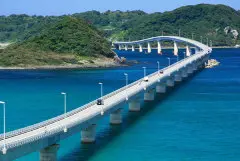
A gentle sea breeze, the whisper of lapping waves whitewashing the shore, and the distant calls of seabirds; these were the first sensations as we crossed the bridge over the Obatake Strait onto an island that feels suspended in time. Suo-Oshima lies quietly in the Seto Inland Sea, near the southeastern coast of Yamaguchi Prefecture, and it’s a place where even silence seems full of life: the rustling pine needles, the echo of your footsteps on a walking path, the faint splash of fish near the rocks.
They call this place the “Hawaii of Setouchi,” a moniker rooted in climate, as well as deep ties through the Japanese diaspora in Hawaii. The island seems lighthearted in name, but the contours of sea and hill invite a far deeper intimacy. Cycling its coastal roads, stepping across a tidal causeway to a lonely islet, climbing toward a summit that frames every curve of the land, you realize this is an island that quickly instills a sense of belonging. It just feels right to be here.
In this itinerary, you’ll travel by bike, instinct, on foot, and by letting the sea’s lullaby guide you. Along the way, I’ll share the moments where I felt most in tune to the island’s rhythm, where the scenery unfolded in sound, sight, scent, touch, and memory.
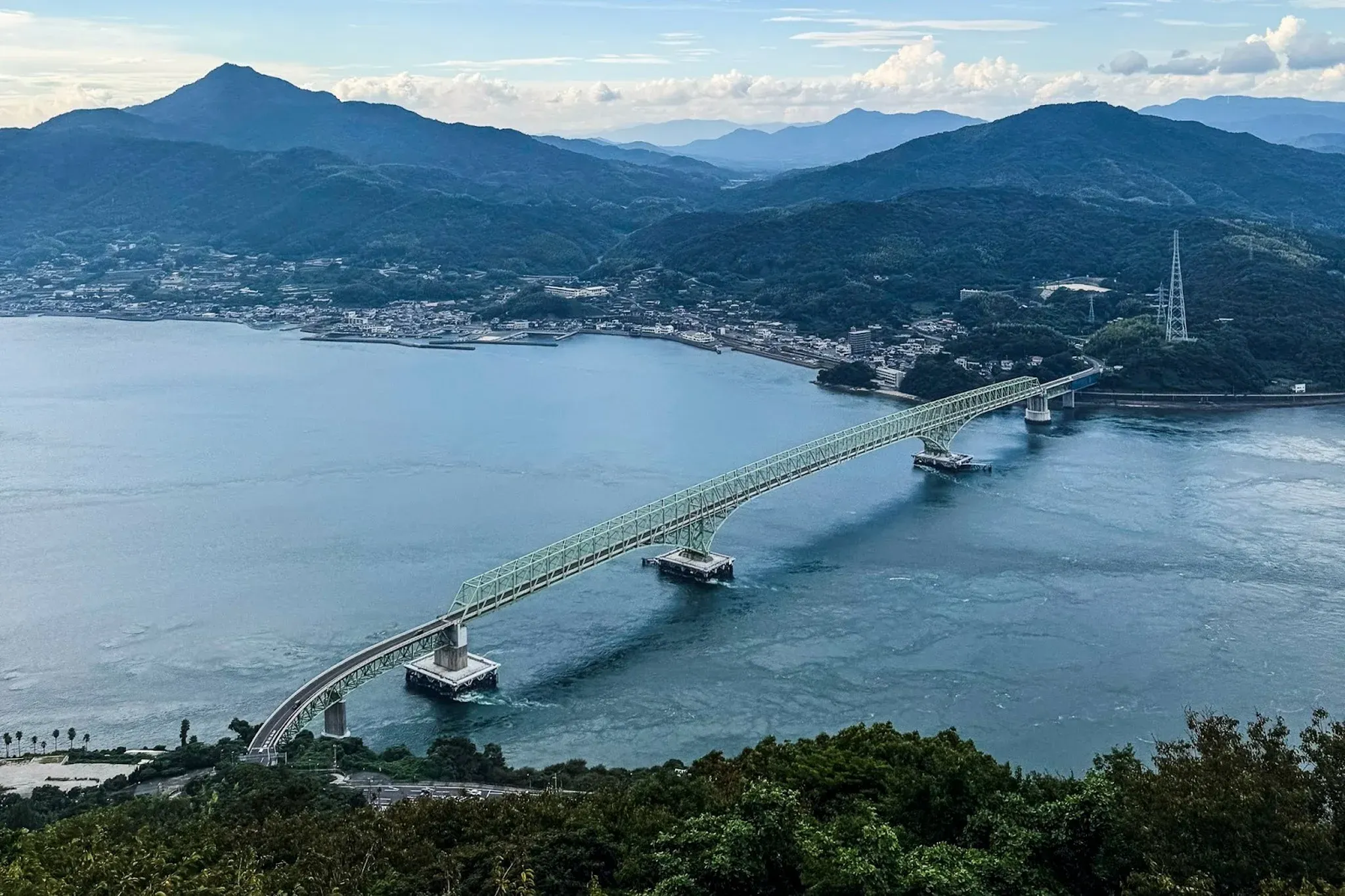
Table of Contents
Cycling Around Suo-Oshima | Encountering Natural Scenery Along the Island Loop
Cycling at your own pace is one of the island’s most generous features. After a heavy rain in the early morning, the road smelled clean and lively, that unmistakable scent of wet earth rising as we pushed off from the roadside station. Feeling the breeze brushing in your face, the sea breathing in soft intervals, and the only background was the local wildlife and the low whirr of the chain. One of the simplest pleasures you could ever ask for.
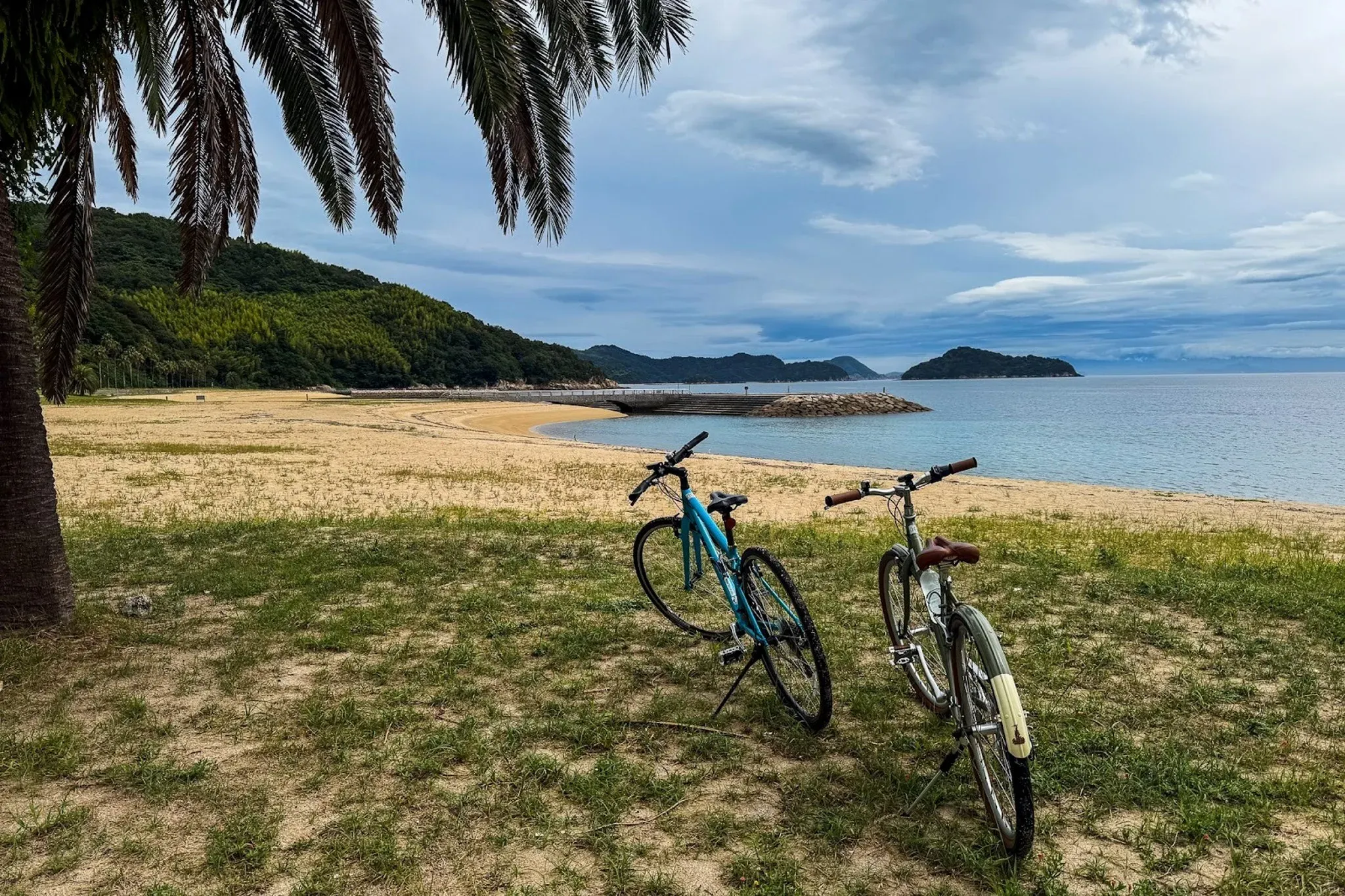
Practicalities are simple. The island’s cycling hub at the roadside station Sazanseto Towa offers standard and e-bike rentals from 10am to 5pm, price can be checked on the official website listed at the bottom. Advance reservations are recommended just in case, simply by calling or e-mailing the facilities. Other than that, carry water, and give yourself time to stop often; part of the pleasure here is how the ride keeps inviting you to linger. You’ll probably find yourself crossing paths sometimes with other visitors on rental bicycles just like we did and in a way, it becomes a sort of shared journey.
From the roadside station area, the loop along Route 437 folds close to the water and then slips past pockets of citrus and pine. You can keep it simple with a relaxed coastal spin or test your legs on the inland slopes; either way, the coastline stays within reach, either for a leisurely and slow ride or a challenging cycling trip. What makes Suo-Oshima so inviting on two wheels is the sense of continuity: the sea at your side, gentle grades, and little moments that pull you to stop, look, and listen.
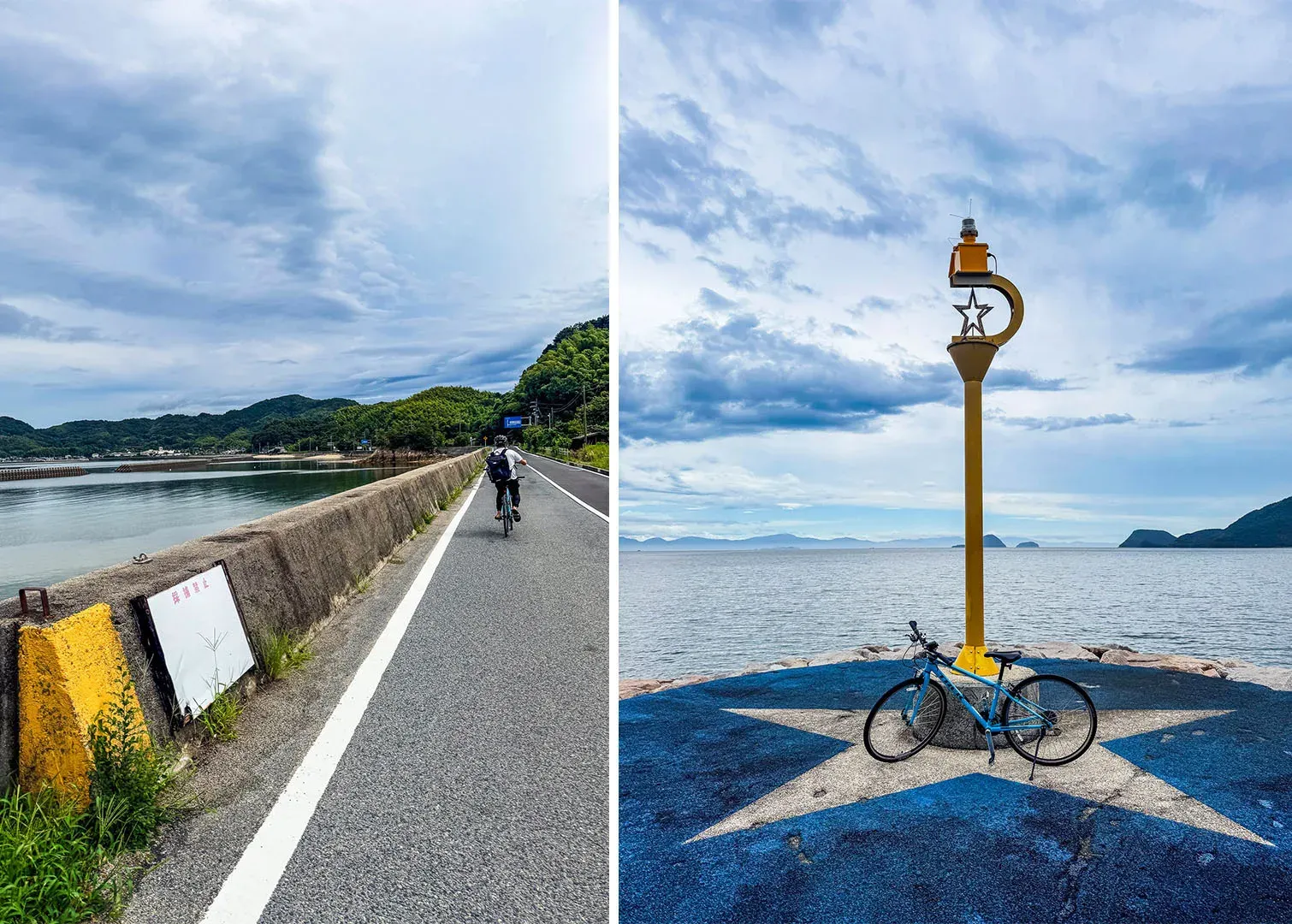
One such stop is Hoshi no Beach, or Star Beach, a calm cove with twin breakwaters and a star-shaped wind vane perched like a tiny lighthouse. It’s become a favorite photo spot among cyclists and night-sky chasers, and the symmetry of the piers frames the color of the water in a way that’s easy to love. In clear weather, the horizon looks drawn with a fine pencil. This is a great spot to take a small breather in the journey and simply sit down to gaze at the sea and sky.
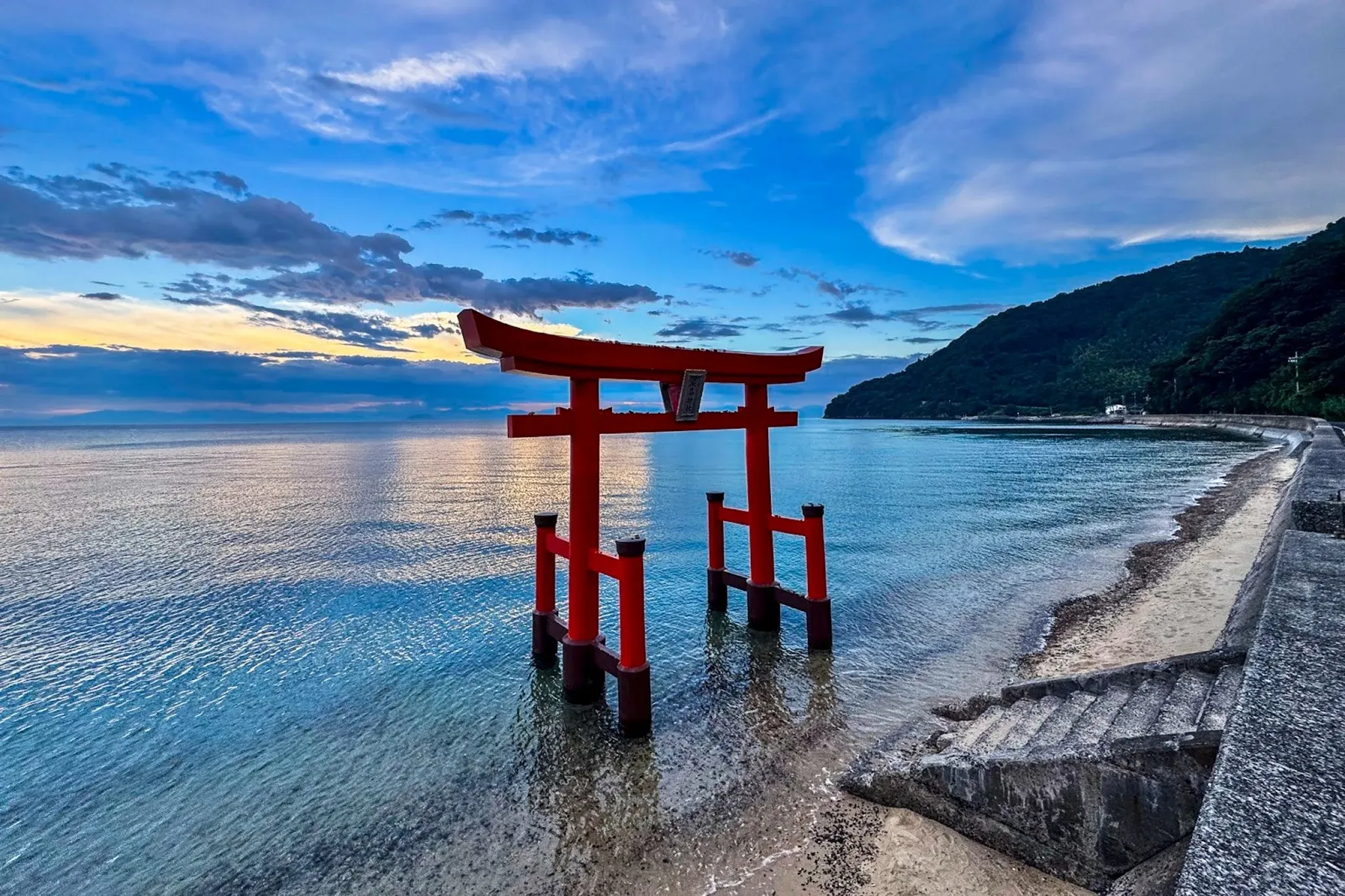
A short roll away, an offshore torii rises from the shallows at a local Itsukushima Shrine. It is a branch of Miyajima’s renowned shrine, and at certain tides the red gate stands ankle-deep, the contrast against the pale sand and blue water startling from the saddle. Ease the cadence, coast for a moment, and let the scene settle. It’s easy to feel fortunate, enjoying this gorgeous sight with no one else around you, only stillness.
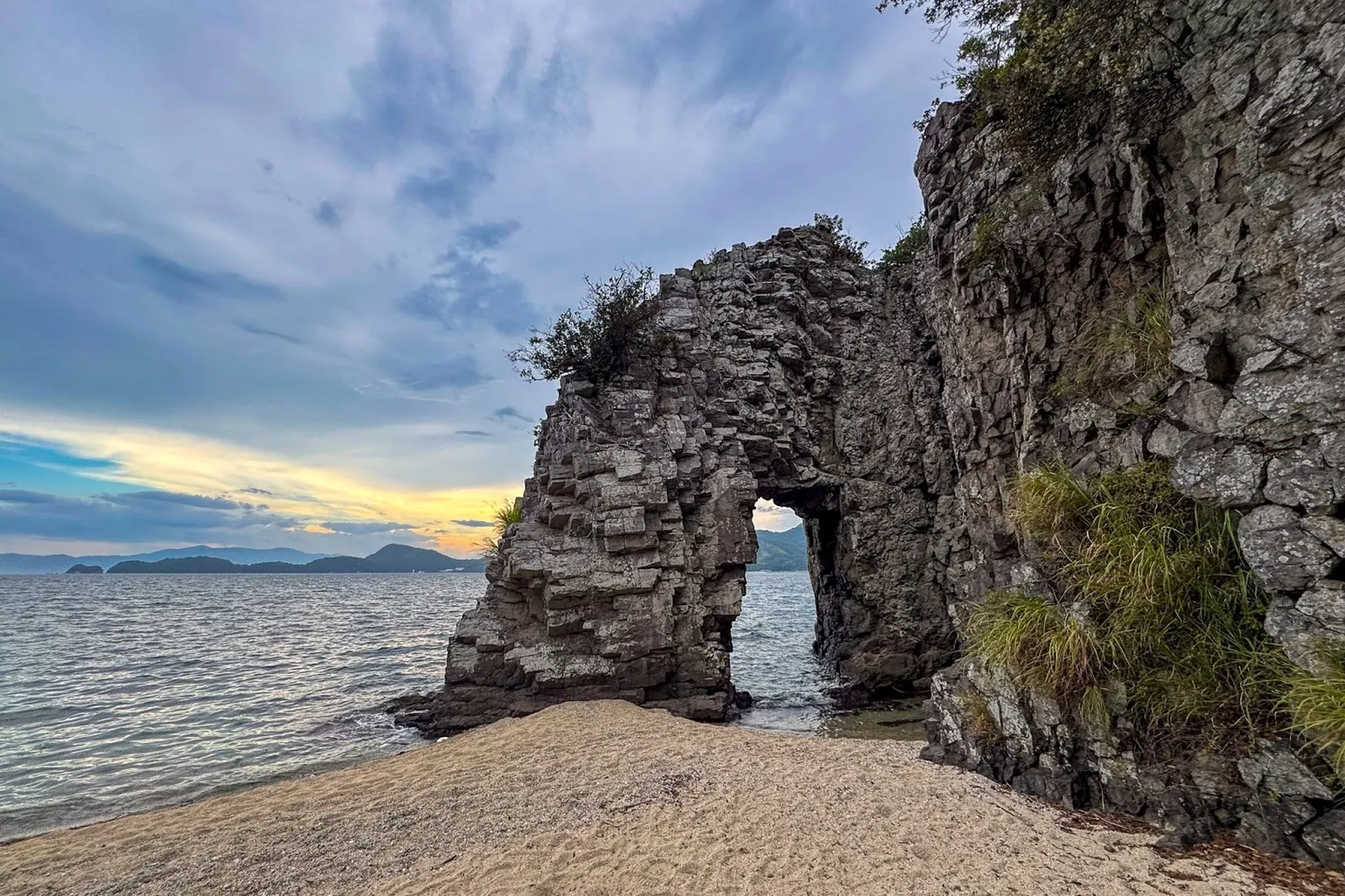
For a stronger hit of geology, head to the Ryuzaki Onsen area and leave the bike at a nearby lot to descend towards Ganmon, a wave-carved arch inside a small rocky inlet, a magnificent nature sculpture. You hear the sea before you see it: water threading the rock, air moving through the opening, a natural metronome under your steps. If the schedule allows it, a brief stop around the local hot springs will feel like the cherry on top of an already perfect day.
Shingu Island | A Journey to an Island Appearing Only at Low Tide
Conveniently situated just behind the Southern Seto Towa roadside station, Shingu Island is Suo-Oshima’s “Angel Road,” a sand path that appears roughly three hours either side of low tide and disappears as the water returns. We stopped twice in one day to watch both tides.
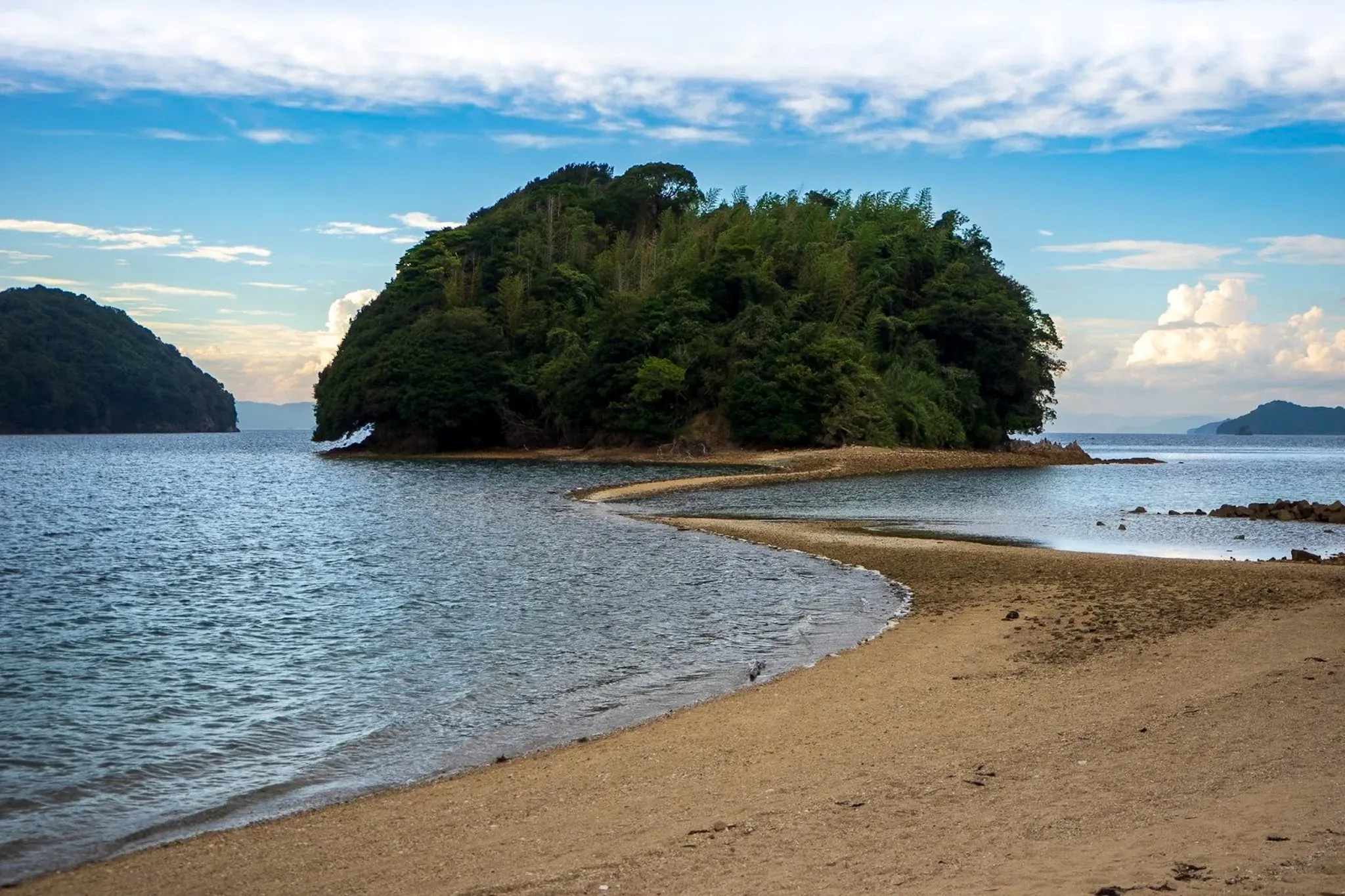
At low tide the causeway lay broad and clean, a pale ribbon across cobalt water; hours later it was gone, the islet afloat again. Walking the sand, I slowed to watch tiny crabs skitter between shell fragments and seaweed, the only sounds the shallow surf and wind. I’d hoped to circle the islet, but the far side was unreachable on foot even at low tide, hemmed by rocks and brush. Time your visit with a tide chart like the one you can check on this website, and go unhurried, as this is a place to cross and then linger, a quiet threshold you borrow for a moment before giving it back to the sea.
Sazanseto Towa | Tasting Local Seafood at the Roadside Station
Roadside station Sazanseto Towa sits a few steps away from Shingu Island, naturally becoming the day’s base. Inside, the direct-sale corner stacks island citrus, jars, snacks, and sea-product staples next to bins of just-picked vegetables, useful for souvenirs and an easy read of what the island grows and makes.
Outside on the seaward side, the Osakana Center, a fresh seafood market, operates as a small food court on weekends and holidays; you can eat there or buy fresh seafood to take away.
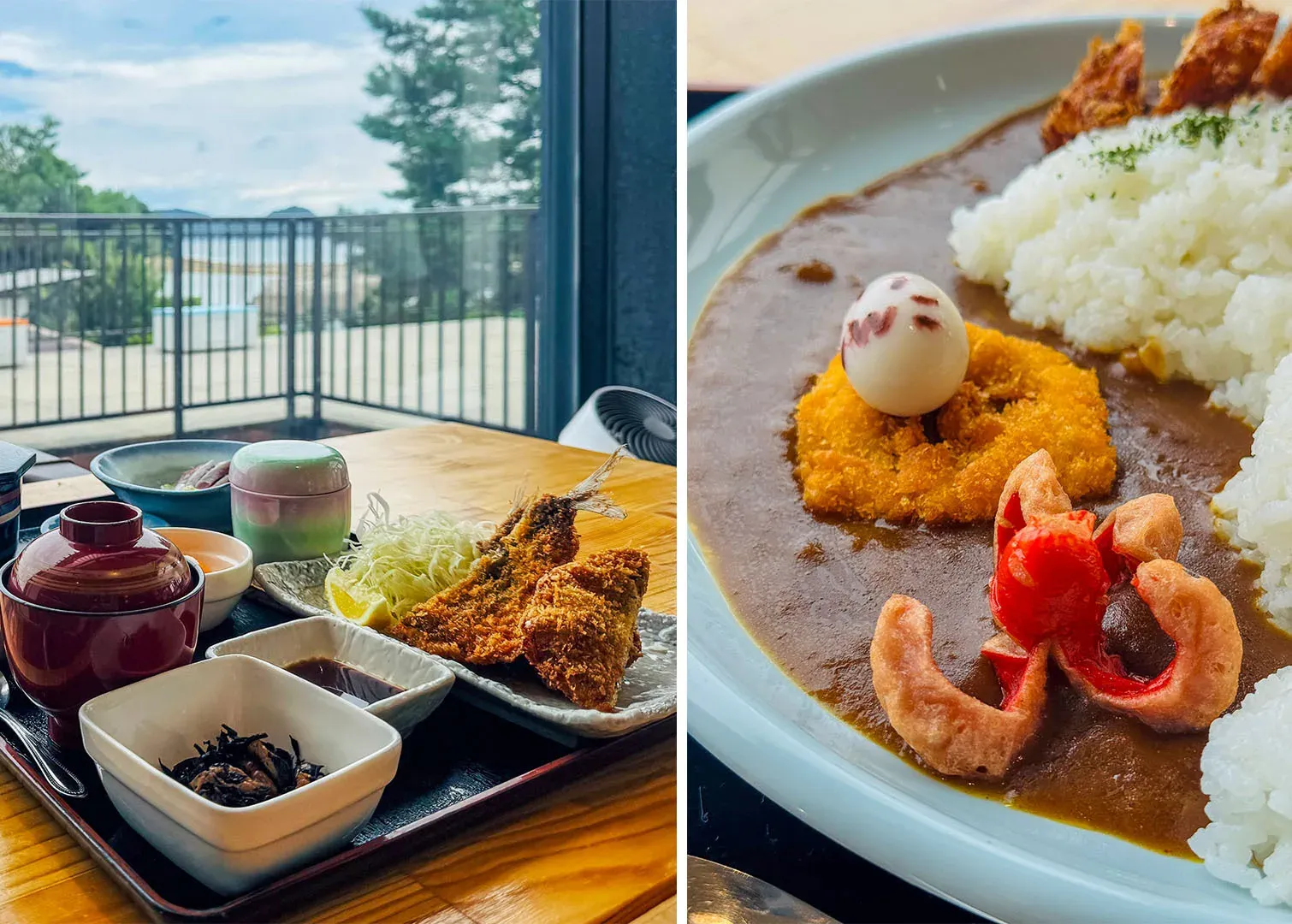
The restaurant, located on the upper floor, overlooks the neighboring ocean. We opted for the fried fish set meal; hot, crisp fillets with rice, miso soup, and a couple of small sides. We also ordered the kids’ set meal, consisting of katsu curry and rice, drawn to the dish’s cute styling with island motifs and tiny octopus sausages that are sure to bring a smile to anyone. Both dishes sit within a menu geared to local catch and straightforward cooking, which suits the setting: glass framing the sea, conversation dropping to the rhythm of the breeze.
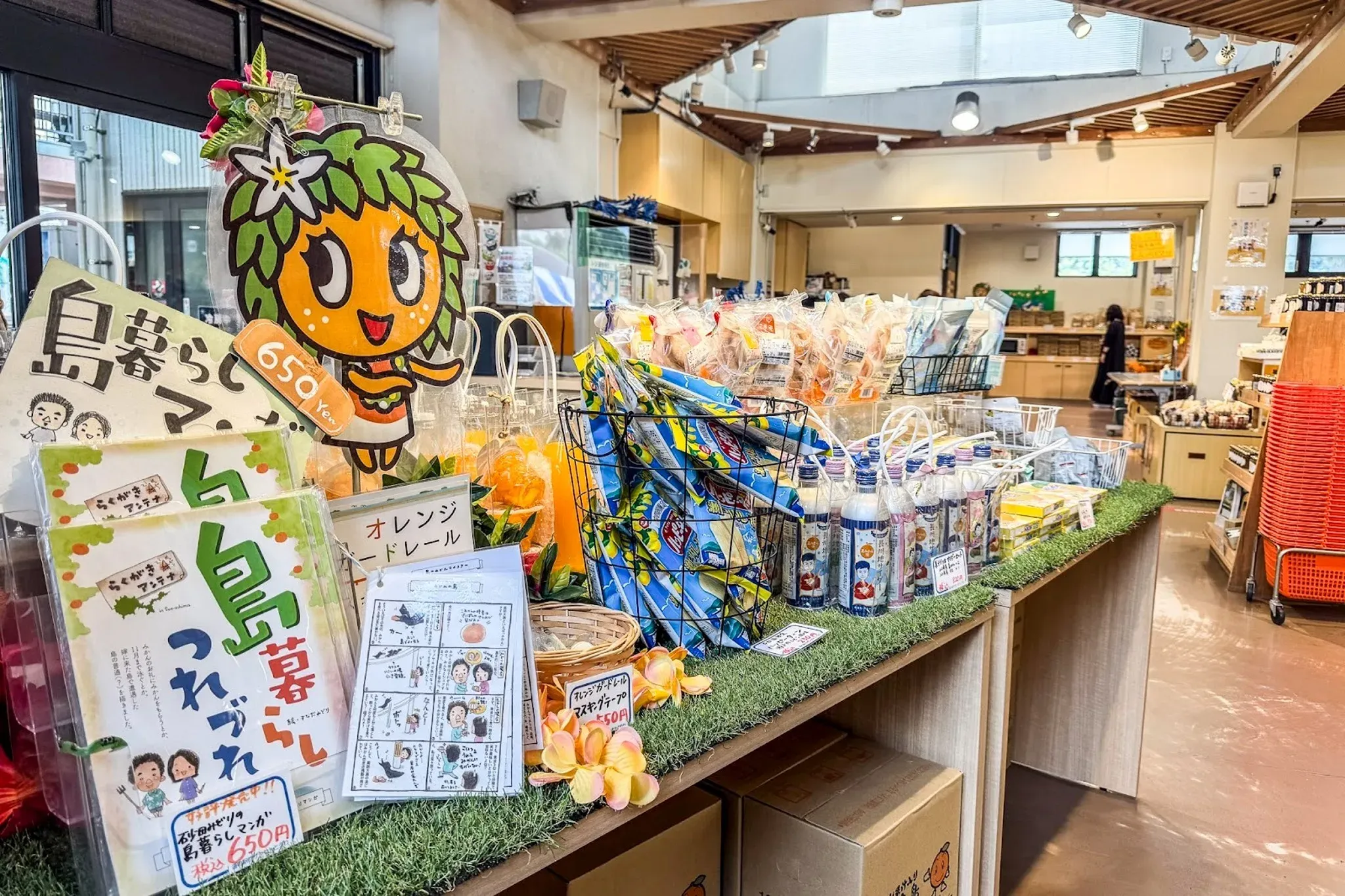
Don’t miss the shop floor for citrus syrups and dried staples to carry home. If you’re linking a ride or walk with a tide check, this is the easiest pivot point on the island, as rentals and the shoreline are steps away, and the location is convenient enough for a lunch break.
Mount Dake | A Crossroads of Nature and Faith
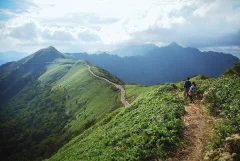
Mount Dake, or Dakesan, sits at the island’s center at about 618m and reads like a natural lookout post over Suo-Oshima. From the summit area the view sweeps across the island-dotted Seto Inland Sea, and on clear days, you can pick out the ranges of Shikoku across the water. The Observation Terrace overlooks the landscape framed in a wide panorama. Nearby, there is also Iwaya Gongen, a small sacred site.
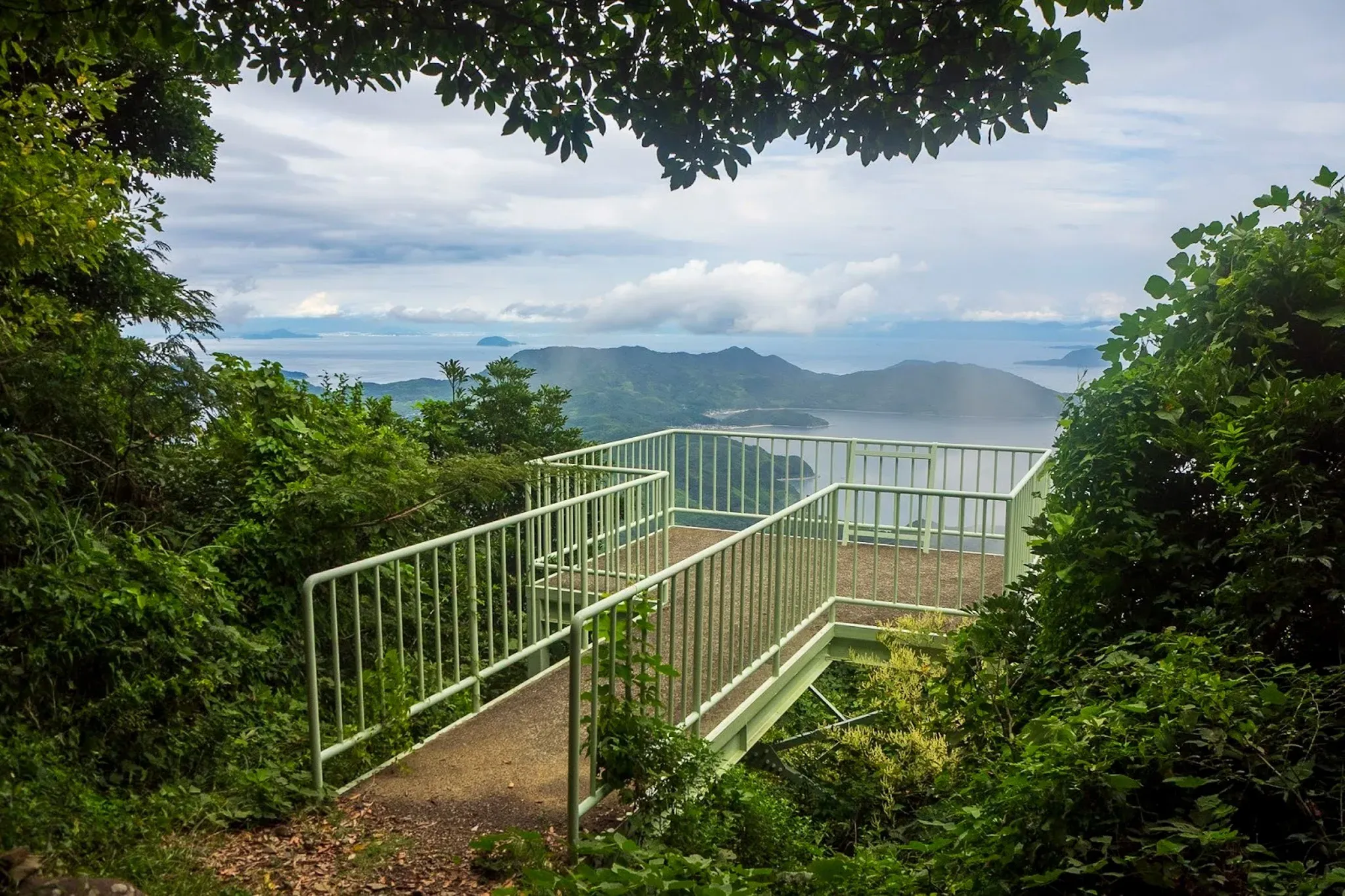
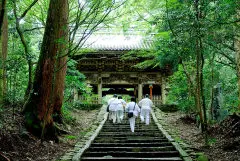
Closer to the crest you’ll pass the launch platforms that are still used for hang-/paragliding (although they are fenced at the edge for safety). From here the path bends toward Iwaya Gongen, a cave-shrine on the mountain’s flank that anchors Dake’s role as a place of worship. The grotto, also revered under the name Takeyama Gongen, enshrines Sanno Gongen, a syncretic local guardian deity worshipped both in Shinto and Buddhism, as well as Kokuzo Bosatsu, a Bodhisattva that symbolizes boundless wisdom and compassion. Also, and The Obi-ishi Kannon, located midway up Mount Dake, is said to have been established when Kobo Daishi discovered a sacred stone here. For these reasons, the peak has long drawn quiet devotion as well as hikers. At New Year, residents still gather to roast mochi over the sacred fire and offer prayers for health, keeping the bond between the village and the mountain alive. Iwaya Gongen is also one of Suo-Oshima’s four “Shiawase Kigan” sacred rock sites (with Ganmon, Tate-iwa, and Obiishi Kannon), associated with blessings for family well-being, safe childbirth, and longevity. The result is a summit that reads both as a lookout and a remarkable place of faith for locals.
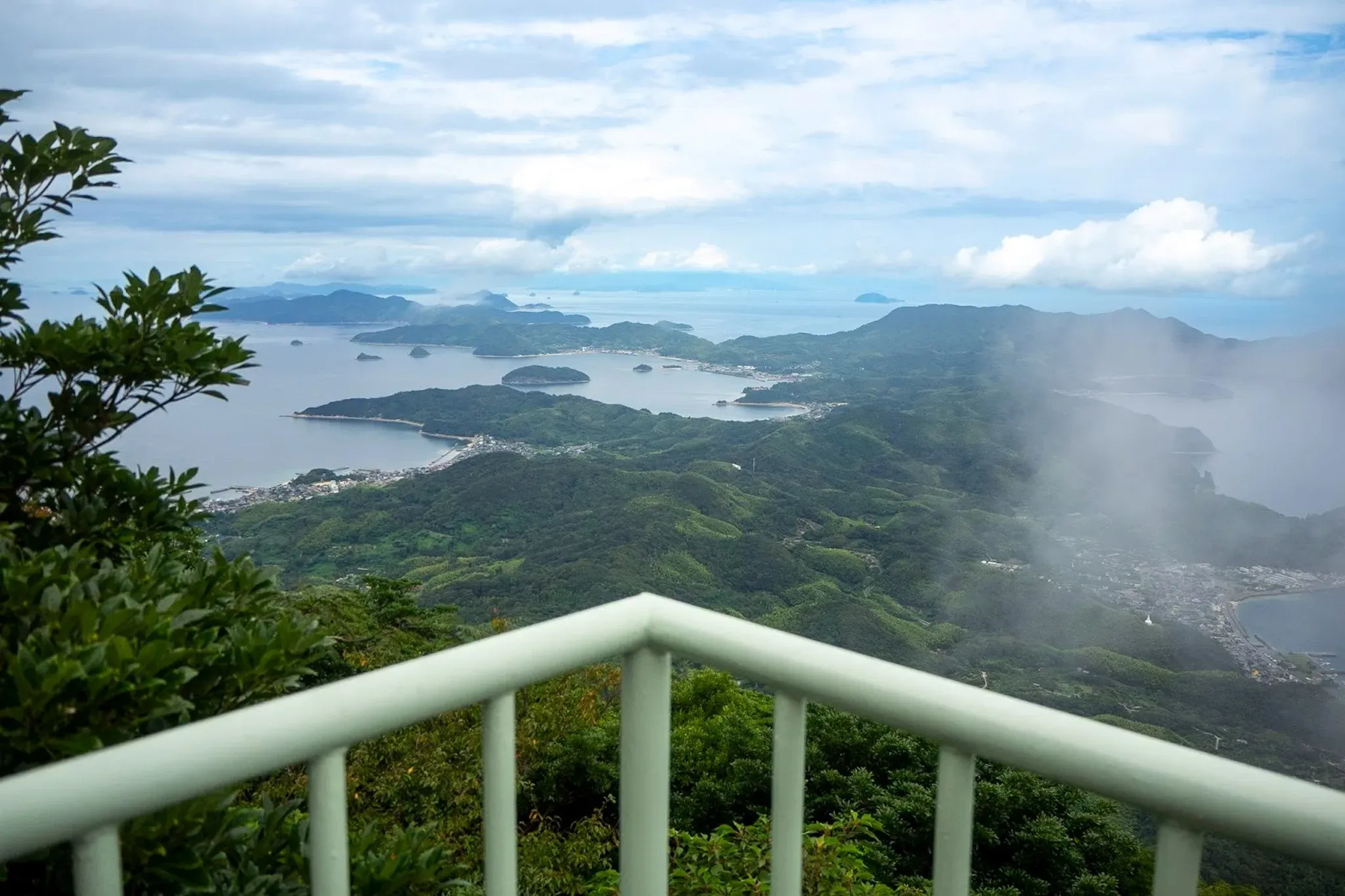
Our experience mirrored the mountain’s mood swings. After morning rain, we followed the paved approach to the upper lot and started the short forested climb. The path felt enclosed with cedar, wet leaves, and the occasional drip from the canopy, until the trees thinned and the terrace opened. Even then, the view kept changing: clouds shearing across the ridge, closing the curtain, then parting without warning to reveal bays, headlands, and silver channels stitched with small boats. We stood still and waited, and the scenes arrived in windows: a rhythm of reveal and retreat that felt earned.
Practical notes: expect compact but uneven sections, with roots and slick rock after rain; grippy footwear helps. Carry water; there’s no summit kiosk. The observatory has benches, but midday can be bright, so a cap is useful. If you’re cycling the island, you can ride to the trailhead and hike the final stretch; otherwise, drive up and keep the walk for the forest portion. From the forest-park lot it should be about 15 minutes on foot each way to reach the terrace, longer if you linger at the terrace for shifting light, so plan for at least 30 minutes in total. On days with haze or low cloud, don’t write it off: the outlook often opens in intervals, which can be the most memorable way to see it.
A Quiet, Personal Journey Through Setouchi
Leaving Suo-Oshima, what lingers is not a single landmark but the way the island demands to be experienced. A morning on the saddle along Route 437 meant letting the sea wind steady the pace, the coast slipping by in quiet rhythm. At Shingujima, tide and time braided together, one moment revealing a sandy road across the water, the next erasing it completely. And on Mount Dake, clouds shifted like sliding doors, alternately concealing and unveiling the horizon of islands adrift in the Seto Inland Sea.
Although connected to the mainland by bridge, the island keeps its own tempo. Moving through it, riding, walking, and climbing, you become part of that cadence, listening as much as looking. Suo-Oshima is less about ticking sights off a list than about giving yourself to the cycles of sea and land. The memories stay not because they are extraordinary, but because they are elemental: air, tide, forest, view.
Related Articles
-
 Adventure & Experience
Five Cycling Routes in Setouchi
-
.webp) Adventure & Experience
Adventure & Experience7 Authentic Experiences Exclusive to the Setouchi Region
-
 Adventure & Experience
Setouchi Trip Ideas that are better with a Private Guide
-
 Adventure & Experience
7 Awe-Inspiring Off-the-Beaten-Path Experiences in Setouchi
-
 Adventure & Experience
Things to Do and Places to Visit in Yamaguchi Prefecture
-
 Adventure & Experience
Things to Do in Iwakuni
-
 Adventure & Experience
Immerse Yourself in the Kamijima Islands Through Community-Focused Cycling Tours
-
 Adventure & Experience
Breakfast With a View: Experience Hiroshima Through Guided Hikes
RELATED DESTINATION
Yamaguchi
Yamaguchi is surrounded by ocean, mountains and rivers and is characterized by its climate, which is comfortable throughout the year. Its natural scenery, which includes some 1,500 kilometers of coastline, is a cut above. The prefecture has Kintaikyo Bridge, one of the three most famous bridges in Japan, and other tourist attractions, and its fugu (pufferfish) is famous as a winter dish.