

History
Tour the Stately Residence and Garden of a Powerful Daimyo Family
_毛利報公会_持溝さん撮影.jpg?fit=fill&w=640&h=640&fm=webp)
-
- DESTINATION NAME
- Yamaguchi
-
- RELATED TAGS
-
- LAST UPDATED
- 18 February, 2026
The Former Mohri Residence and Garden, which overlooks the city of Hofu on the southern coast of Yamaguchi Prefecture, was commissioned by Mohri Motonori (1839–1896) as a new family home. Although construction began in 1892, Motonori passed away long before its completion in 1916, leaving his son, Mohri Motoakira (1865–1938), to reside at the stately property. In 1967, the estate was opened to the public.
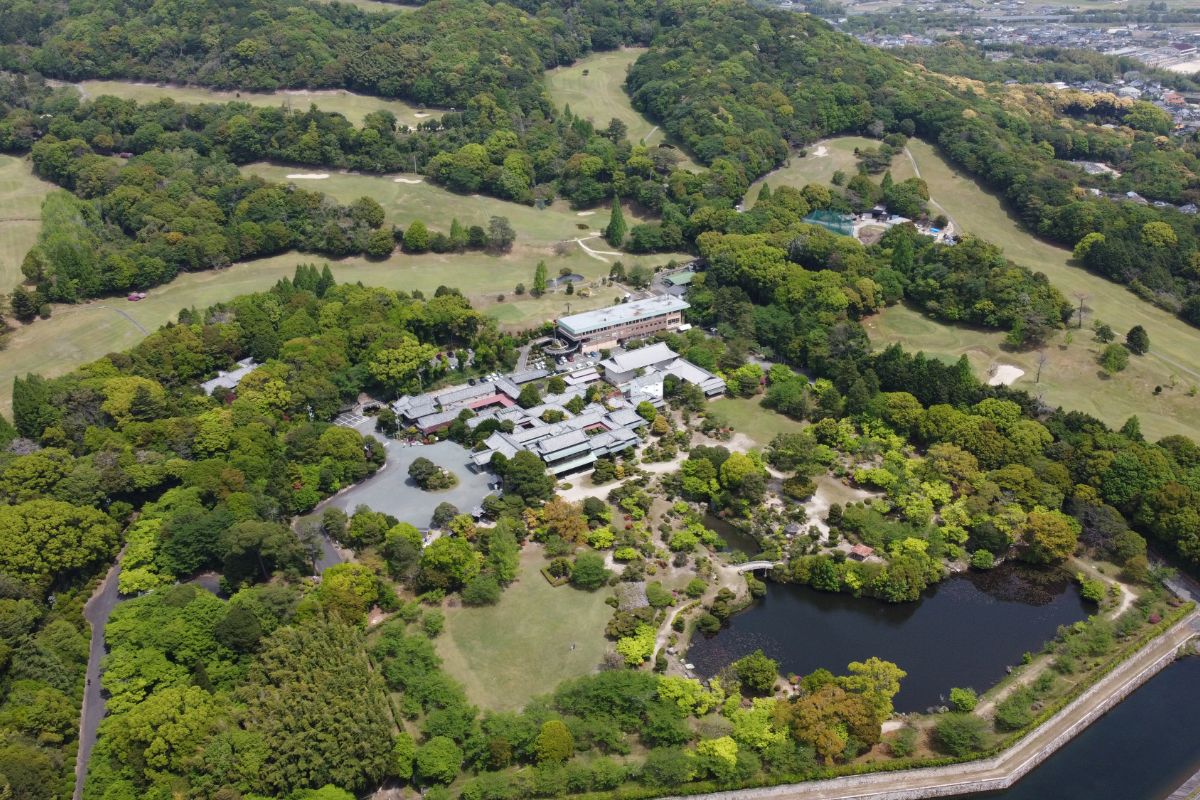
Visitors to the Residence and Garden can take a guided tour to learn about the property and the history of the powerful Mohri family. Guides recount its history along with in-depth explanations of the architecture and furnishings, which exhibit both traditional Japanese and Western influences. The tour includes the on-site Mohri Museum’s rich collection of art, weapons, and personal items, as well as the vast Japanese garden with its striking views of the manor.
Traditional Japanese Design With Western Elements
With its tiled roof and extensive use of wood, the exterior of the Mohri residence conveys an impression of traditional Japanese architecture. The main entranceway, resembling a temple gate with a gabled roof extending outward, was built to welcome distinguished guests, reflecting the Mohri family’s status within the hereditary Japanese peerage of the time.
せとうち観光推進機構).jpg)
While traditional Japanese elements dominate, numerous features of the house demonstrate influences from overseas. Western elements are particularly evident in the first-floor reception room, which is carpeted and has an ornate metal light fixture on its ceiling. This room is where guides deliver a brief historical overview of the Mohri family and the house at the start of the tour.
せとうち観光推進機構).jpg)
せとうち観光推進機構).jpg)
The family’s wealth is evident in the high-quality woods used in the structure, including cypress from the Kiso Valley in central Japan and rare cedar from the southern island of Yakushima. The broad floorboards in the corridors are made of Taiwanese hardwood. The plate glass windows installed throughout the building would have been considered a luxury and a somewhat unusual feature in a traditional Japanese building of the time.
After touring the other first-floor rooms and viewing the three internal courtyard gardens, visitors ascend a staircase to the second floor of the residence. This floor, which consists of a single room, affords a magnificent view of the main garden and the Seto Inland Sea in the distance. Likewise, the vantage from the large pond and stone bridge in the garden provides a superb view of the residence itself.
せとうち観光推進機構).jpg)
A Collection of Family Treasures
The Mohri Museum, located in two rooms at the far end of the first floor, is part of the tour. Its rotating exhibits showcase some of the approximately 20,000 items that have been passed down through many Mohri generations. Commonly displayed pieces include weapons and armor from the family’s early generations of daimyo lords, as well as ceremonial clothing, delicate ceramics, and tea utensils that demonstrate their longstanding interest in the arts.
Artwork belonging to the Mohri family is often exhibited here, such as the landscape painting Shikisansuizu by Sesshu Toyo (1420–1506), which depicts the four seasons across a 16-meter scroll. Important handwritten historical documents on display include the Secret Imperial Rescript to Overthrow the Shogunate of 1867, addressed to the Mohri daimyo of the Choshu domain. Also in the collection is a famous epistle written by daimyo Mohri Motonari (1497–1571), in which he instructs his three sons to keep together, famously stating that while one arrow can be broken, three held together cannot. This story is said to have ensured the family’s unity in times of crisis.
せとうち観光推進機構).jpg)
せとうち観光推進機構).jpg)
The Long Road to Hofu
The family first rose to prominence in the sixteenth century under Mohri Motonari, who extended his sway from a small province in present-day Hiroshima Prefecture to nearly all of the Chugoku region by defeating neighboring clans. His grandson, Mohri Terumoto (1553–1625), was defeated by the warlords Oda Nobunaga and Toyotomi Hideyoshi, but later made peace, even serving under Hideyoshi during the 1592 invasion of Korea.
せとうち観光推進機構).jpg)
However, Terumoto’s fortunes reversed when he backed the losing side in the Battle of Sekigahara in 1600. After the victor in that battle, Tokugawa Ieyasu, took control of the country, the Mohri lands were drastically reduced in size. Terumoto was forced to construct a new castle in Hagi, in present-day Yamaguchi Prefecture, as the seat of the diminished Choshu domain. His descendants governed Choshu as daimyo until the abolition of the domain system in 1871.
With this change, the Choshu domain became Yamaguchi Prefecture, and the Mohri daimyo family was granted the title of duke within the new Meiji peerage. The castle in Hagi was demolished, leaving the Mohri without a residence in their ancestral lands. These circumstances appear to be what guided Mohri Motonori to choose Hofu as the place to construct a new family seat: the stately home that is now the Former Mohri Residence and Garden.

Related Articles
-
 History
To Towns Where Time Breathes: A Journey Through the History and Ancient Streetscapes of the Seto Inland Sea
-
 History
4-day history and culture experience in Yamaguchi and Hiroshima
-
 History
Walk Through the White-Walled Streets of Kurashiki’s Merchant Past
-
 Relaxing Stay
A Nostalgic Japanese Landscape - A Relaxing Inn in the Mountains to Revitalize Your Body and Mind
-
 History
An Architectural Pilgrimage Through Setouchi: Experiencing the Region’s History, Tradition, and Modern Spirit
-
 History
Tsuyama: Wander Through a Thousand-Year-Old Castle Town Where Historical Marvels Meet Sustainability
-
 Art & Culture
Yamaguchi Prefectural Art Museum: A Journey Through Time
-
 Adventure & Experience
Things to Do and Places to Visit in Yamaguchi Prefecture
RELATED DESTINATION
Yamaguchi
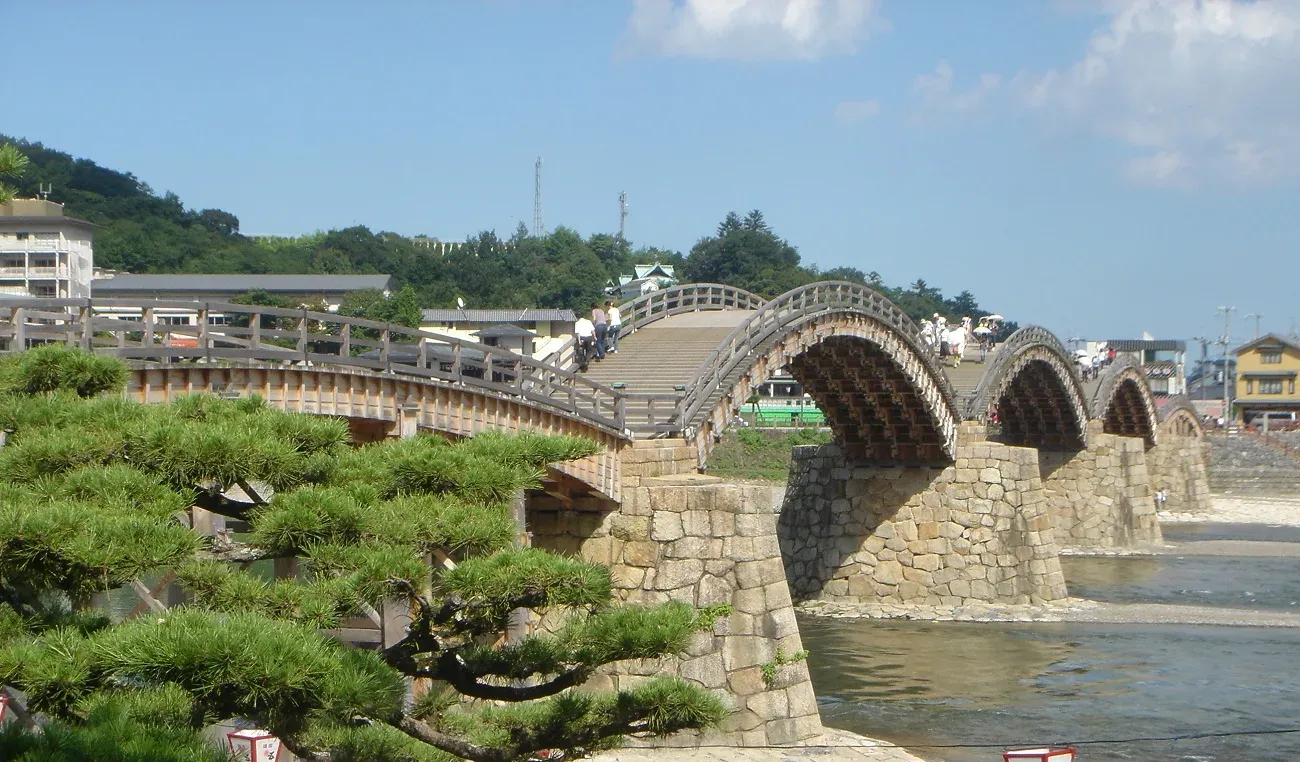
Yamaguchi is surrounded by ocean, mountains and rivers and is characterized by its climate, which is comfortable throughout the year. Its natural scenery, which includes some 1,500 kilometers of coastline, is a cut above. The prefecture has Kintaikyo Bridge, one of the three most famous bridges in Japan, and other tourist attractions, and its fugu (pufferfish) is famous as a winter dish.