

Adventure & Experience
Discover Hiroshima’s Broader History With City Center Cycling Tours

-
- DESTINATION NAME
- Hiroshima
-
- RELATED TAGS
As the number of atomic-bomb survivors grows smaller each year, Hiroshima’s darkest day is shifting from personal memory into shared history. Younger residents are searching for new ways to convey how ordinary people experienced that world-changing event. Through innovative tours and guided experiences, they aim to cultivate visitor interest in Hiroshima’s larger past and vibrant present, shifting the focus beyond a single traumatic event.
Ishitobi Satoshi, who goes by “Tobi,” was raised in Hiroshima. As a young man, he struggled to reconcile stories of the war and the atomic bomb with his peaceful upbringing in the modern city. In 2017, Tobi began leading cycling tours around central Hiroshima to introduce visitors to the city’s broader history, including insights into what daily life was like for residents during World War II. With frequent stops and a leisurely pace, his tours encourage casual conversations that help participants feel personally connected to the contemporary city.
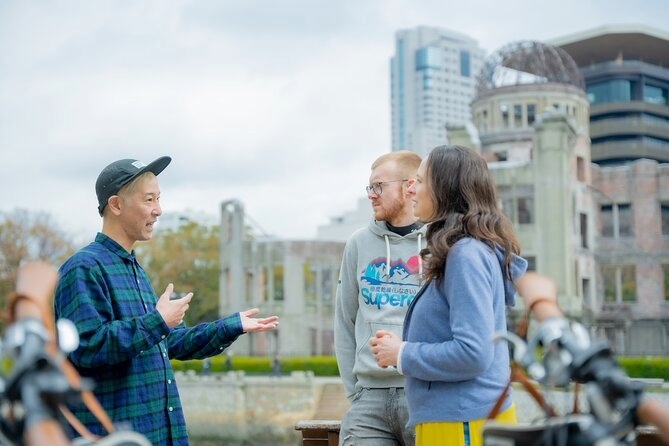
A Warm Welcome to Hiroshima
Tobi’s Sokoiko! cycling tours begin at Hiroshima City Peace Memorial Park Rest House with a brief orientation session delivered by Tobi or a fellow guide. In addition to providing safety information and explaining logistics, this initial encounter allows guides to chat casually with participants about their lives, home countries, and experiences in Japan.
This friendly beginning sets the tone, emphasizing dialogue, discovery, and engagement. Guides work from a general list of key discussion points, enabling them to easily tailor their approach to suit different interests, backgrounds, and age groups. Rather than rushing from point to point, the cycling proceeds at a leisurely pace, letting participants absorb the city’s atmosphere as they ride.
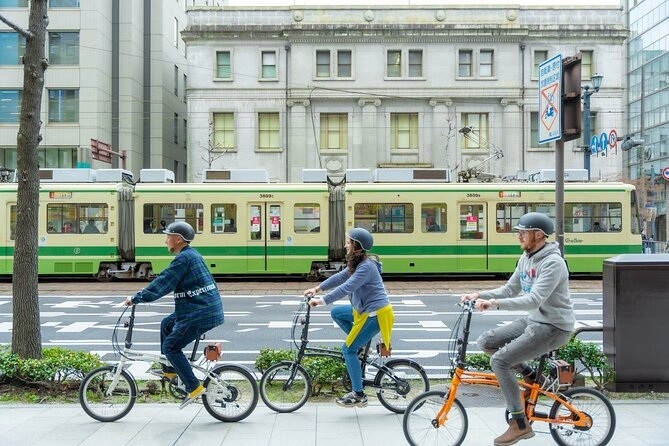
A Castle Town of Merchants and Artisans
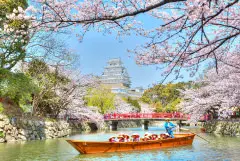
Early in the tour, the guide introduces Hiroshima’s historical origins with a brief explanation accompanied by simple visual aids. Hiroshima was founded in the late sixteenth century by the warlord Mori Terumoto (1553–1625), who established Hiroshima Castle. The city subsequently rose to prominence as a key port and commercial center under the Asano family, who governed the Hiroshima domain from 1619 to 1871. Some Sokoiko! cycling tours stop by Hiroshima Castle to provide a tangible sense of this formative period in the city’s history.
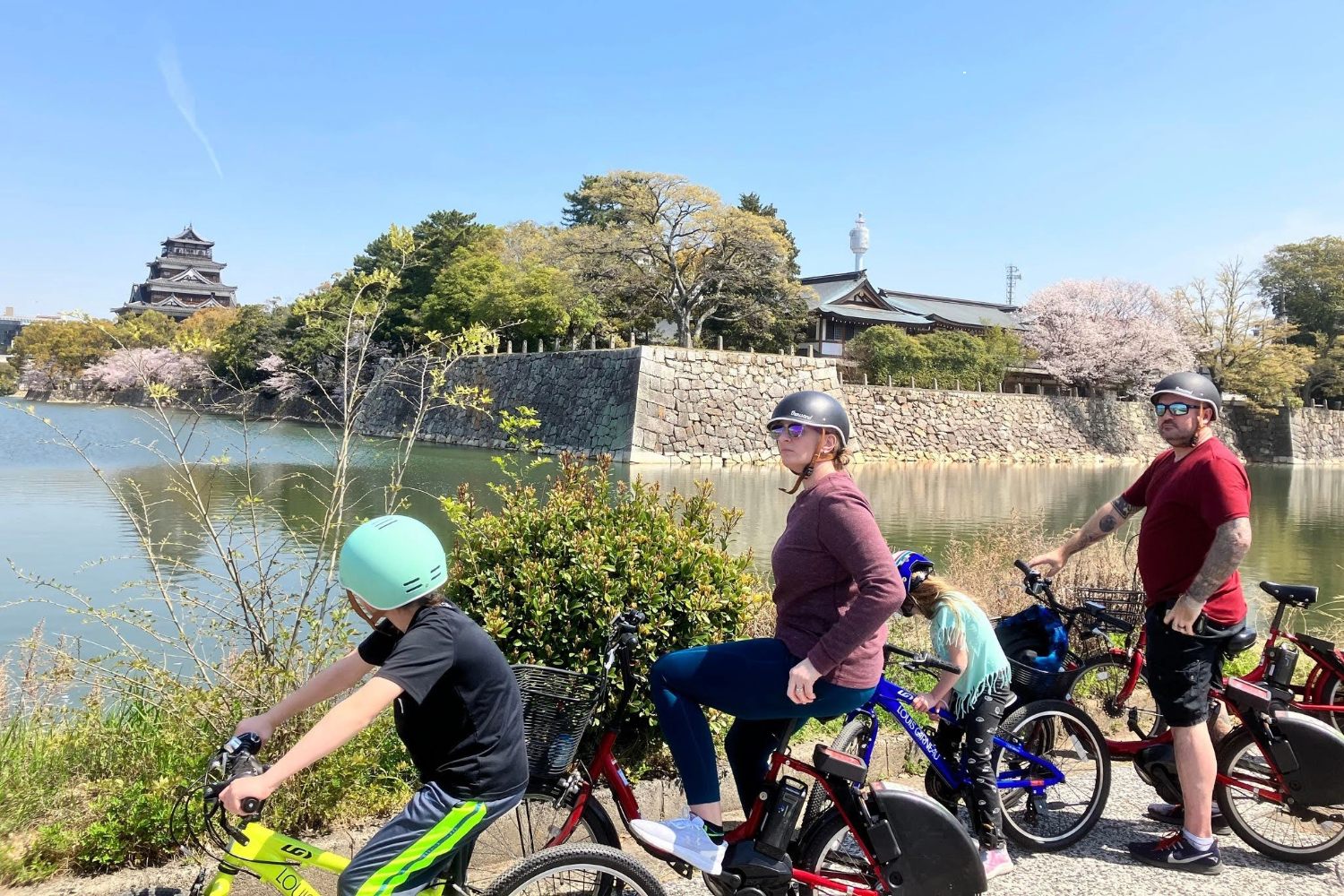
As the city was confined by mountains to the north, its only avenue for expansion during this era was the reclamation of tidal lands to the south of the castle. Frequent flooding and poor soil quality in these reclaimed areas made farming difficult. Many Hiroshima residents turned to artisanal trades, including fine metalwork, lacquerware, and the making of calligraphy brushes.
A Historical Military Center
Another focus of the tours is Hiroshima’s military past, which predates World War II. Due to its large population of craftspeople and artisans, Hiroshima emerged in the late nineteenth century as a major industrial production center for the military, with factories producing uniforms, weapons, and ammunition.
The city’s strategic location at the western mouth of the Seto Inland Sea also made it a crucial base for the Japanese navy. Army and navy deployments embarked from the city’s port during the Sino-Japanese War (1894–1895) and the Russo-Japanese War (1904–1905), as well as World War II. The nearby port city of Kure housed Japan’s largest naval arsenal, including the shipbuilding facilities where the mighty Yamato battleship was constructed.
Despite its prominence as a military target, Hiroshima was largely spared conventional Allied air raids during World War II. When a solitary B-29 flew over the city on August 6, 1945, many people assumed it was a reconnaissance plane, not a bomber. But it released the first atomic bomb ever deployed against human beings, causing a catastrophic explosion.
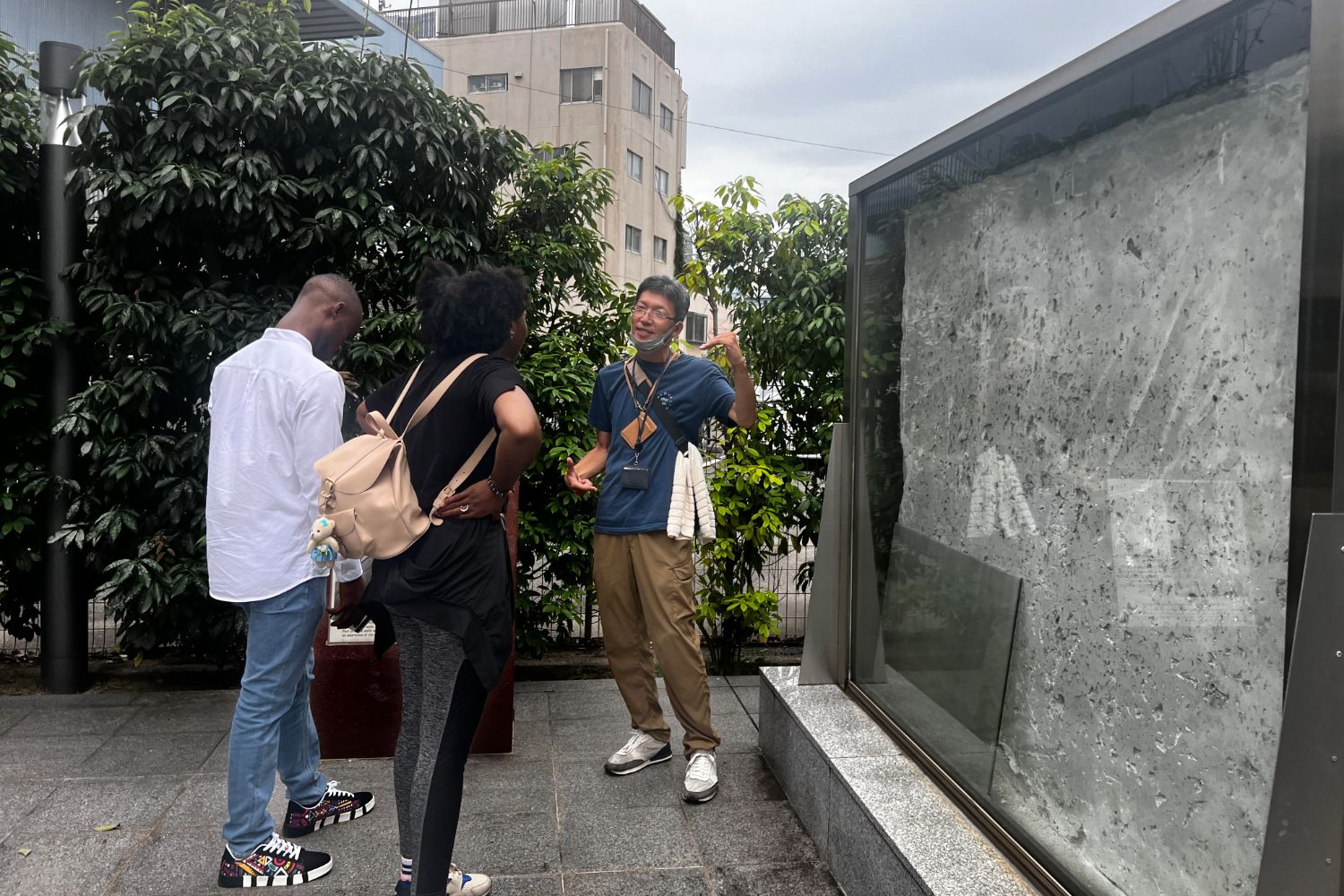
The Sokoiko! guides handle this pivotal moment with great compassion and consideration. Their descriptions paint a vivid picture of how ordinary Hiroshima residents experienced that fateful morning, both in the moments before and immediately after the explosion. These explanations take place on the very streets where people were going about their lives when the bomb detonated.
A Symbol of Peace
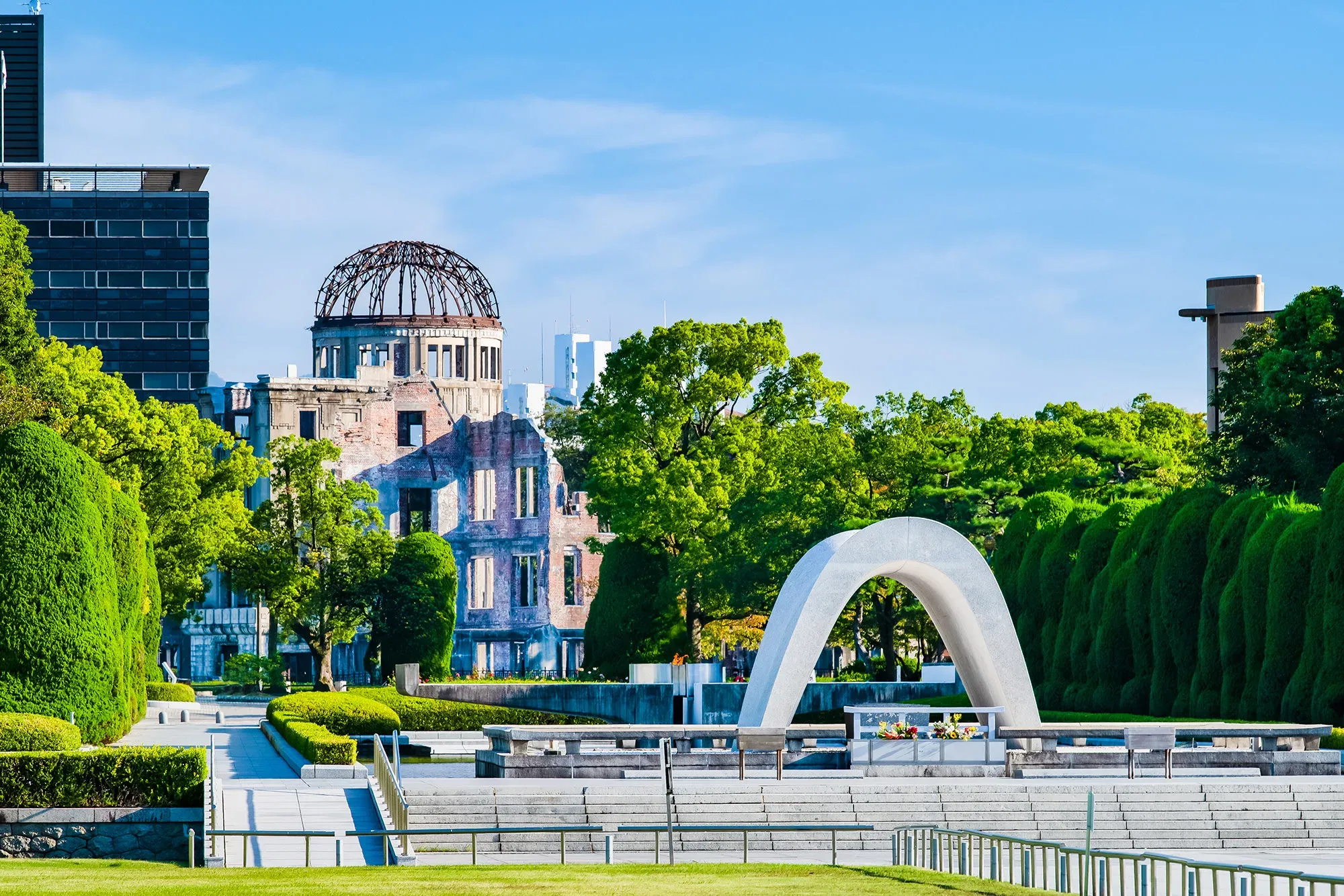
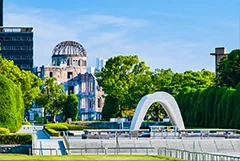
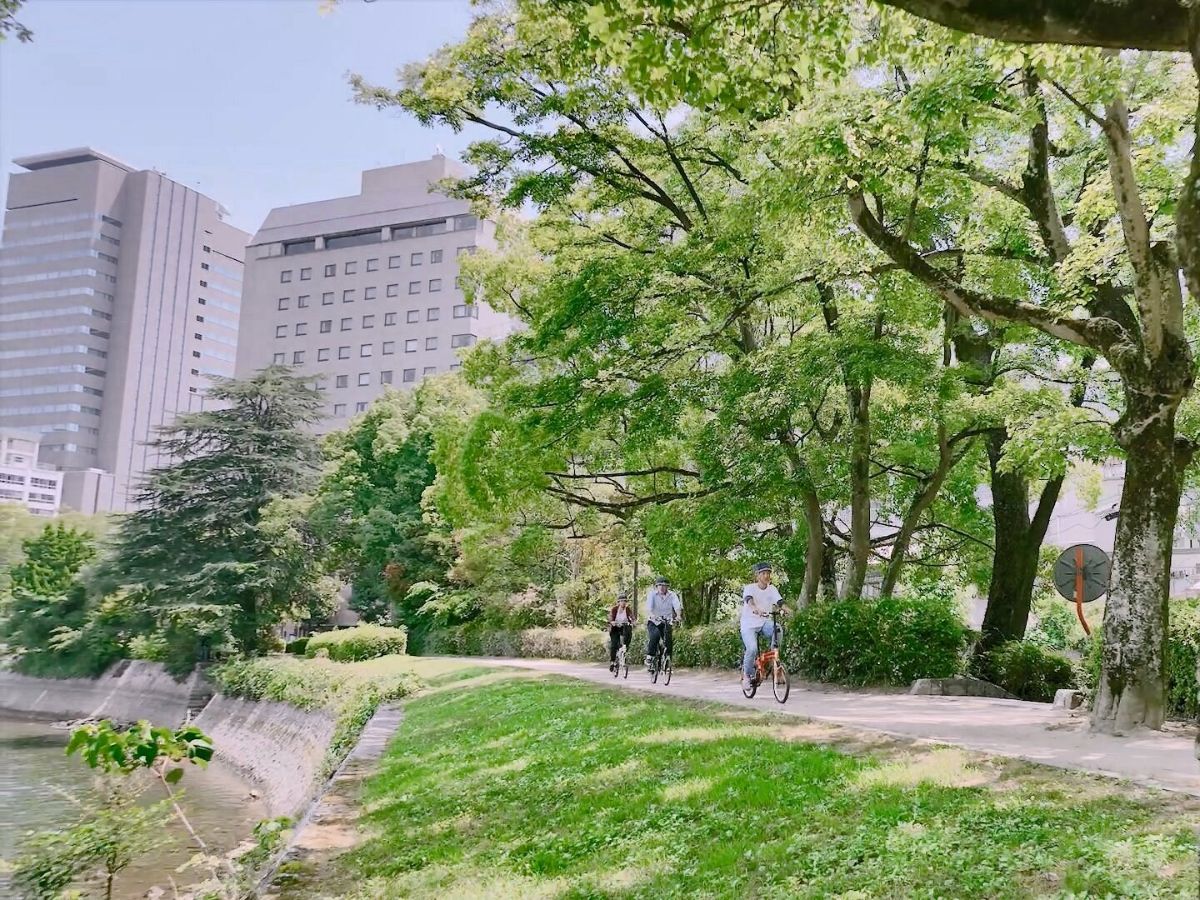
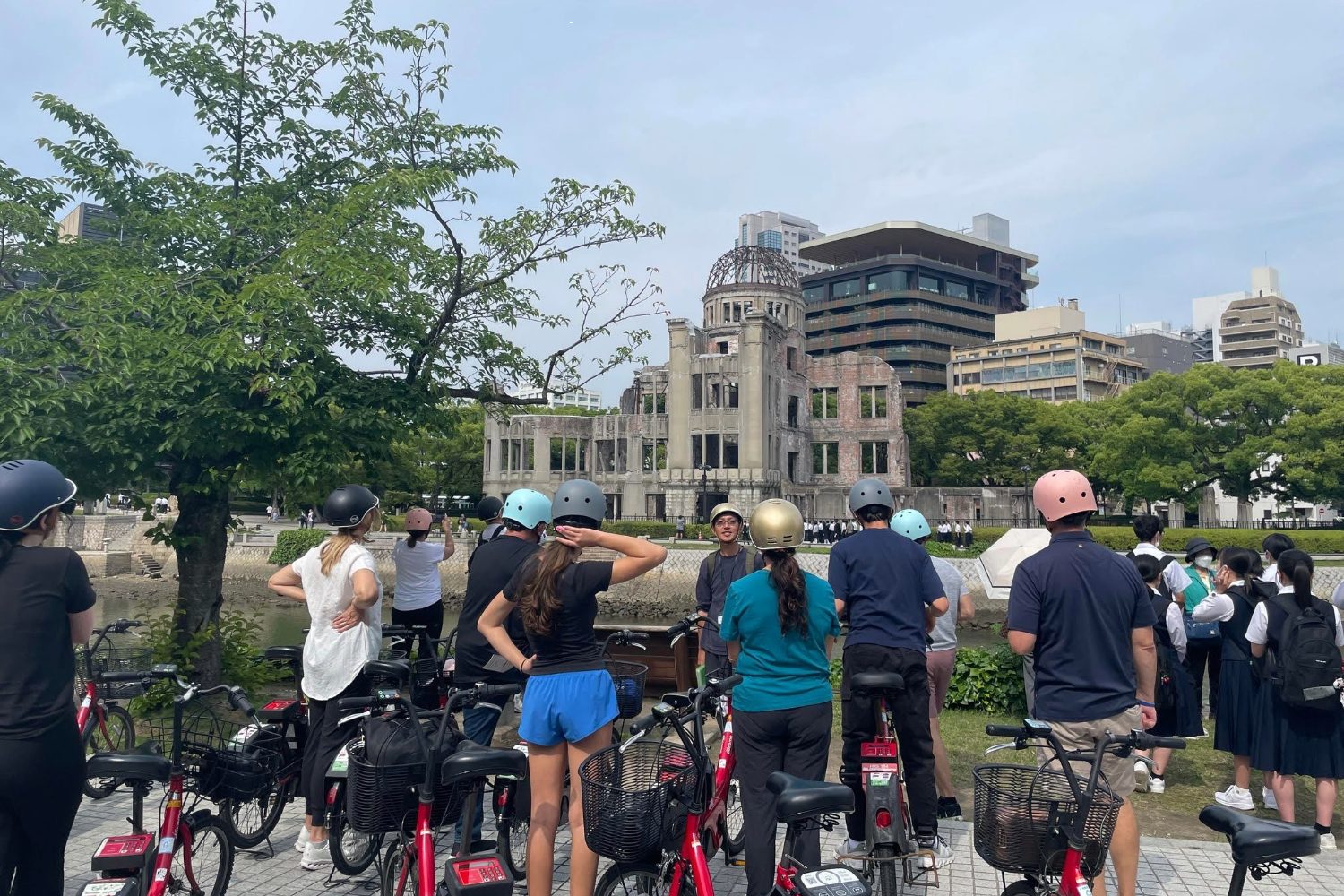
First-time visitors to Hiroshima are often struck by the city’s contemporary calmness and beauty. This is the modern Hiroshima that Tobi and his fellow guides are keen to showcase. As they recount stories of postwar reconstruction, they guide participants down picturesque tree-lined paths that run alongside branches of the Ota River. Each tour passes through Peace Memorial Park. Here, solemn reminders of war like the Peace Memorial Museum and the Atomic Bomb Dome have come to symbolize the global hope for world peace.
Practical Information for Sokoiko! Cycling Participants
Because the terrain is flat, distances are relatively short, and guides proceed at a leisurely pace with numerous stops, Sokoiko! cycling tours accommodate all fitness levels. Visitors of any age can join; they need only be able to ride a bicycle. Group tours of up to ten participants run multiple times per day, with private excursions available upon request. Helmets are provided and must be worn to comply with Japanese traffic safety laws. In the event of inclement weather, a guided walk with an adjusted route will be substituted for cycling.
.jpg)
Those who enjoy their Hiroshima experience can also sign up for Sokoiko! tours in Tokyo, Tsuwano, Asuka, and Kita Hiroshima.

Related Articles
-
 Adventure & Experience
Breakfast With a View: Experience Hiroshima Through Guided Hikes
-
 Adventure & Experience
Shimanami Kaido Cycling and Dogo Onsen
-
 Adventure & Experience
Setoda: A Leisurely Trip to the Island of Lemons Along the Shimanami Kaido!
-
 Adventure & Experience
Beyond the Shimanami Kaido - Unique Spots just off Japan’s Famous Cycling Route
-
No7237_しまなみサイクリング.webp) Adventure & Experience
Adventure & ExperienceOnomichi Tourist Association Cultivates Guides to Unlock New Regional Charms
-
 Adventure & Experience
7 Awe-Inspiring Off-the-Beaten-Path Experiences in Setouchi
-
 Adventure & Experience
Shimanami Kaido Cycle Highway Week 4
-
 Adventure & Experience
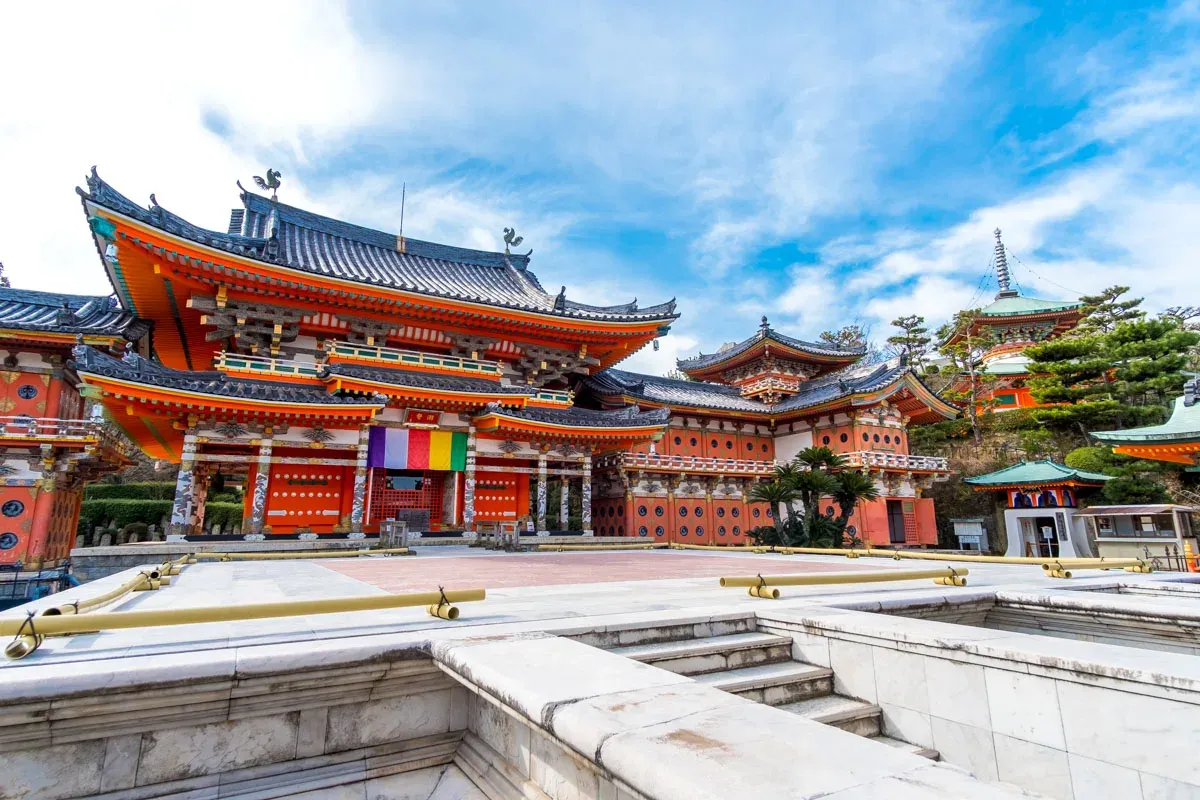
Hiroshima: Kosanji Temple and Hirayama Museum Along the Shimanami Kaido
RELATED DESTINATION
Hiroshima
Hiroshima is the central city of Chugoku region. Hiroshima Prefecture is dotted with Itsukushima Shrine, which has an elegant torii gate standing in the sea; the Atomic Bomb Dome that communicates the importance of peace; and many other attractions worth a visit. It also has world-famous handicrafts such as Kumano brushes.