






Art & Culture
Join Awaji Island Artisans for a Hands-On Kawara Tile-Making Experience

-
- DESTINATION NAME
- Hyogo
-
- RELATED TAGS
-
- LAST UPDATED
- 18 February, 2026
Artisans on Awaji Island in Hyogo Prefecture who manufacture traditional fired-clay roof tiles known as kawara are opening the doors of their workshops to visitors. At the Tatsumi kiln, guided tours offer insight into how kawara have been produced here since the early Edo period (1603–1867). They take participants through the entire process, from quarrying and mixing the clay to shaping, drying, and firing the final tiles. Visitors can view various kawara at different stages of production and observe artisans carving by hand the ornamental ridge-end tiles known as onigawara. The kiln’s Ibushi Gallery displays the creative work of local artisans and offers hands-on experiences where participants can try decorating kawara.
Guided Tours of the Workshop and Kiln
Tours of Tatsumi begin with an introduction to the raw material that forms the basis of the tile manufacturing process: an extremely fine-grained clay soil mined at several quarries around Awaji Island. This soil is mixed with water to form large, pliable sheets of clay, which are then shaped into roof tiles and other items. Because tiles need to match and fit precisely, molds are utilized to produce identical sets of kawara. At Tatsumi, there are molds for hundreds of different designs, shapes, and sizes of roof tiles, as demonstrated by an inventory chart shown during the tour.
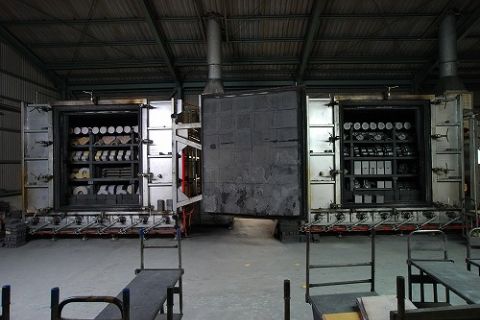
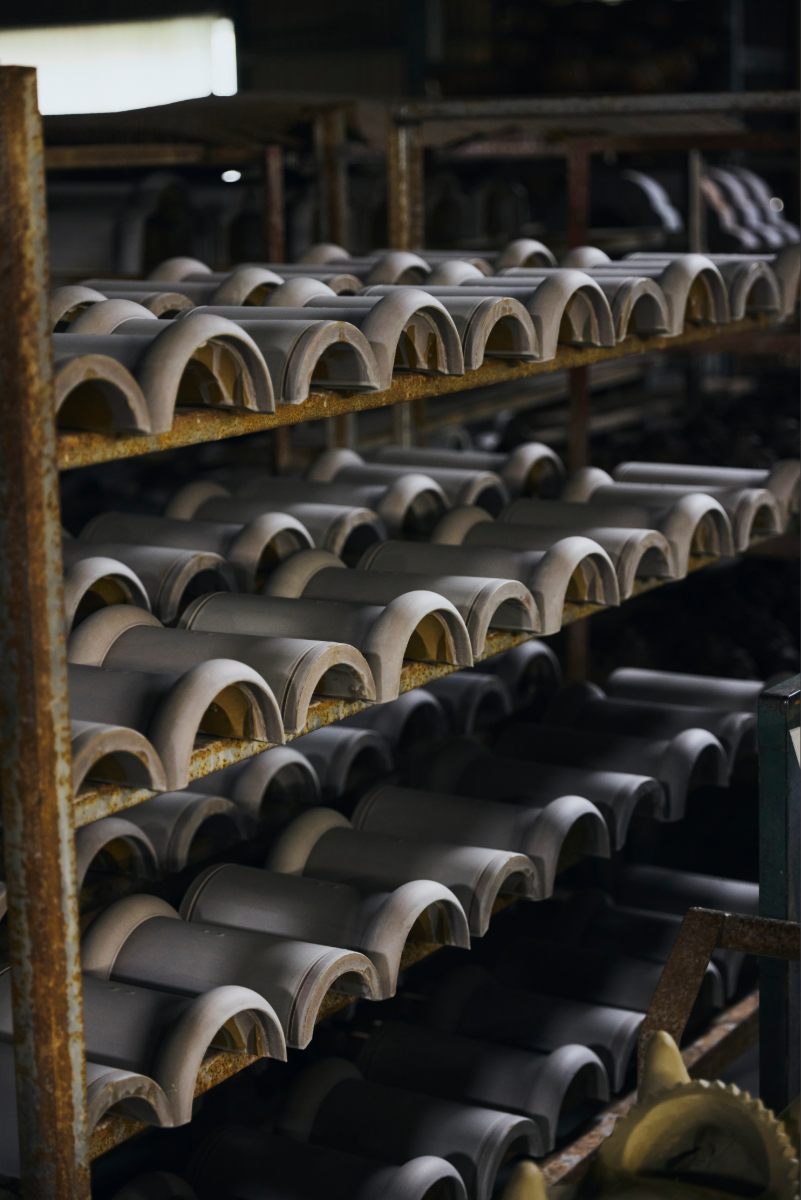
After the clay has been molded into its desired shape, it is left to dry before being fired in the kiln. This drying period varies depending on the size of the tile, ranging from approximately a week for smaller ones to several months for larger decorative pieces. Once drying is complete, tiles are placed into the kiln for an initial firing at over 1000°C. Due to the high iron content of the clay, this heat turns the tiles dark brown. In the final step, reduction firing, gas is fed into the sealed kiln, causing a carbon film to coat the surface of the clay. This gives the tiles their distinctive silver-grey color while making them more durable and water resistant.
On the tour, visitors are shown kawara at different stages in the process on large racks throughout the facility. They can also view the kiln itself while the guide explains how the initial firing and reduction firing transform molded clay into finished tiles. If firing has occurred recently, visitors may feel residual heat radiating from the kiln.
Observing Skilled Artisans Carve Elaborate Onigawara Tiles by Hand
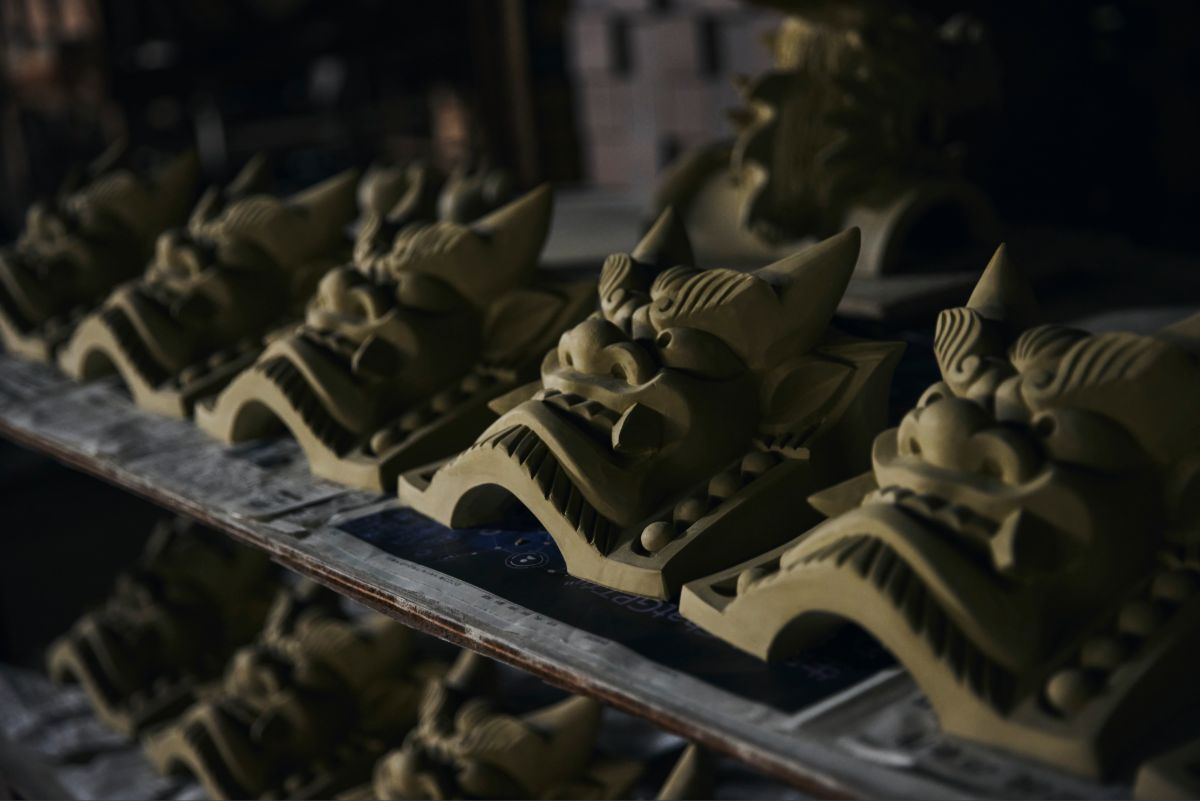
While regular roof tiles are produced using molds, specialized artisans known as onishi create intricate decorative tiles by hand. These special tiles are collectively termed onigawara, as they frequently depict the faces of Japanese demons (oni). Beyond oni, they sometimes portray animals, flowers, patterns, or mythical beings. Onigawara are typically placed at the edge of rooflines, as tradition holds that they ward off evil and misfortune.
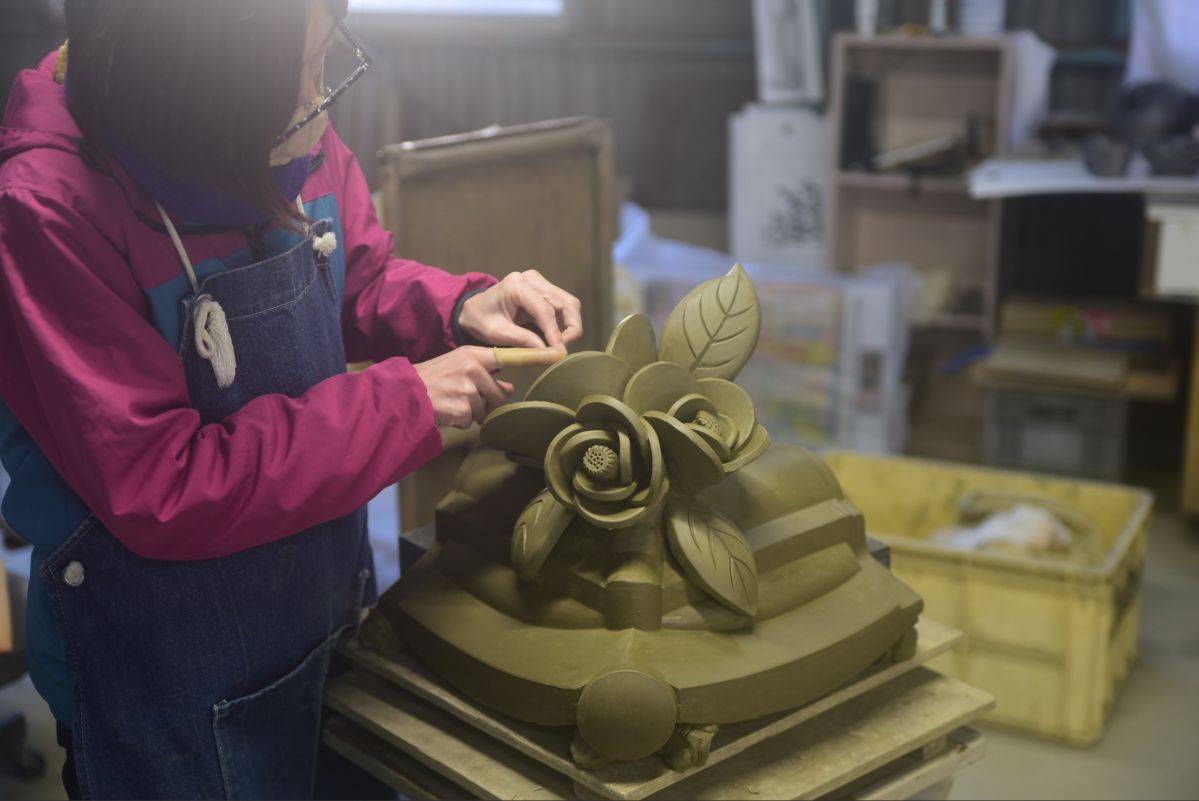
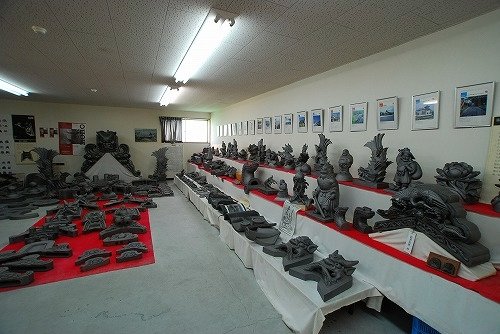
During the Tatsumi workshop and kiln tour, visitors can observe onishi at work. One of these skilled artisans is the kiln owner’s wife, the workshop’s first-ever female onishi. On the second floor of the workshop, tour participants can see onigawara tiles sent to Tatsumi for repair, as well as several particularly beautiful pieces preserved as artworks by the owner.
Hands-On Experiences With Kawara Tiles
To acquaint visitors more closely with kawara, several local tile kilns offer various hands-on experiences. One experience at Tatsumi is a decoration session, where participants use pens and paint to add color to mini-onigawara panels. Another involves painting an original design onto a blank tile. Other activities available at nearby kilns include making kawara coasters and even the chance to try smashing a stack of kawara tiles with a karate chop.
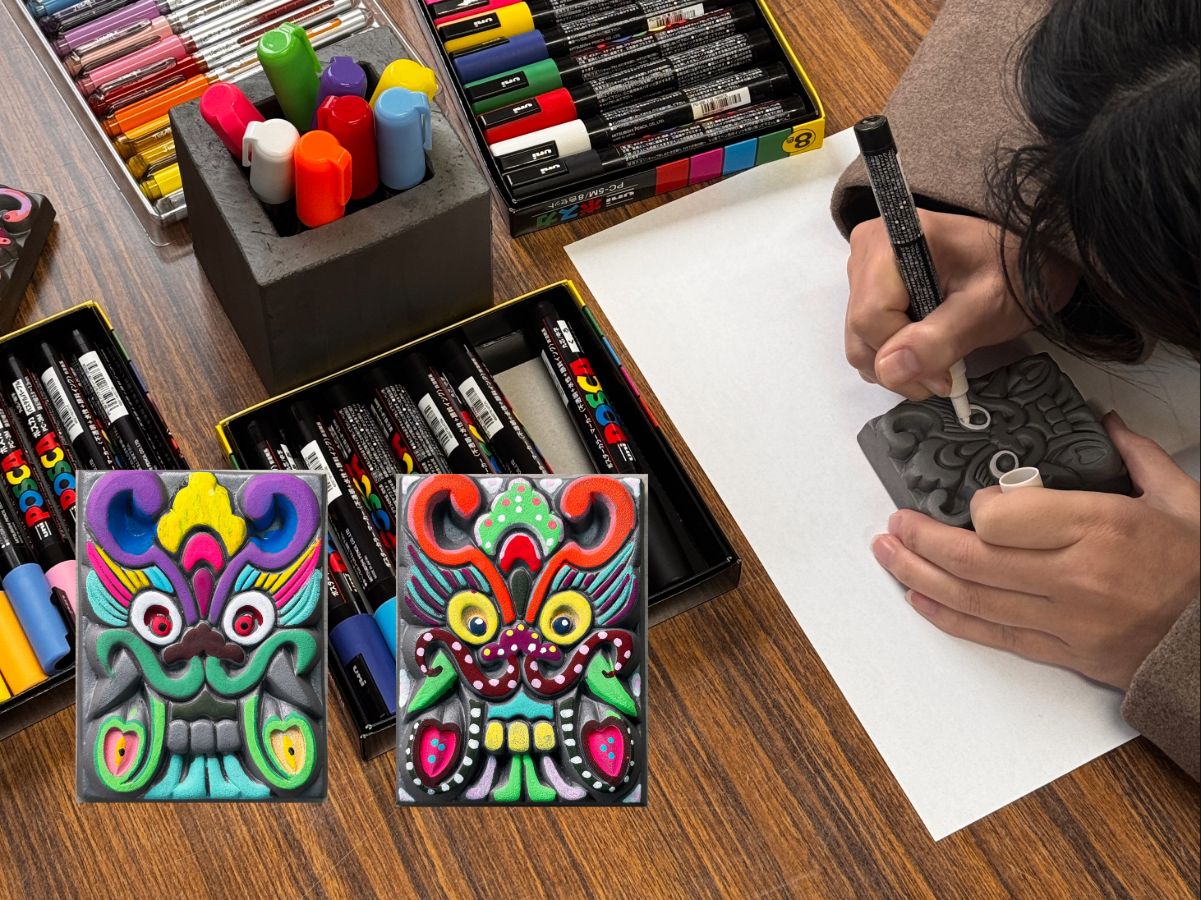
Experiences at Tatsumi are held in the Ibushi Gallery near the front of the facility. The word ibushi refers to the reduction firing process that imbues Awaji roof tiles with their characteristic silver-grey color. The Ibushi Gallery contains a shop that sells a range of items—such as coasters, statuettes, and earrings—all created through the same process used to manufacture roof tiles.
A Centuries-Old Trade With an Uncertain Future
Kawara, one of the most distinctive features of traditional Japanese architecture, can be seen on the roofs of temples and shrines, as well as some homes and public buildings. Introduced to Japan from China via the Korean Peninsula in the Asuka period (593–710), these tiles were a considerable technological development. Compared with materials like thatch or wood, kawara offered superior durability and greater fire resistance. Kilns on Awaji Island began manufacturing kawara in the early Edo period, eventually emerging as one of the major centers of their production.
Despite their historic status as an iconic element of traditional Japanese architecture, kawara face an uncertain future. Following the 1995 Great Hanshin Earthquake, public concern arose regarding the weight of kawara tiles and their potential life-threatening danger in major seismic events. While new designs and installation procedures mitigate these risks, tile makers continue to struggle against these persistent public perceptions. In the years since the earthquake, the number of tile workshops on Awaji Island has become significantly smaller. Nonetheless, the artisans at Tatsumi and other island kilns continue to ply their centuries-old trade as they seek new avenues to pass on the tradition to future generations.

Related Articles
-
 Art & Culture
Masterpieces Wrapped in Stories
-
 Art & Culture
Tour Local Kilns to Experience the Venerable Tamba-Ware Pottery Tradition
-
 Art & Culture
A Journey Through Setouchi’s Architecture in Harmony with Sea and Mountains
-
 Art & Culture
Local Products Continuing the Manufacturing Techniques and Culture of the Setouchi Region
-
 Art & Culture
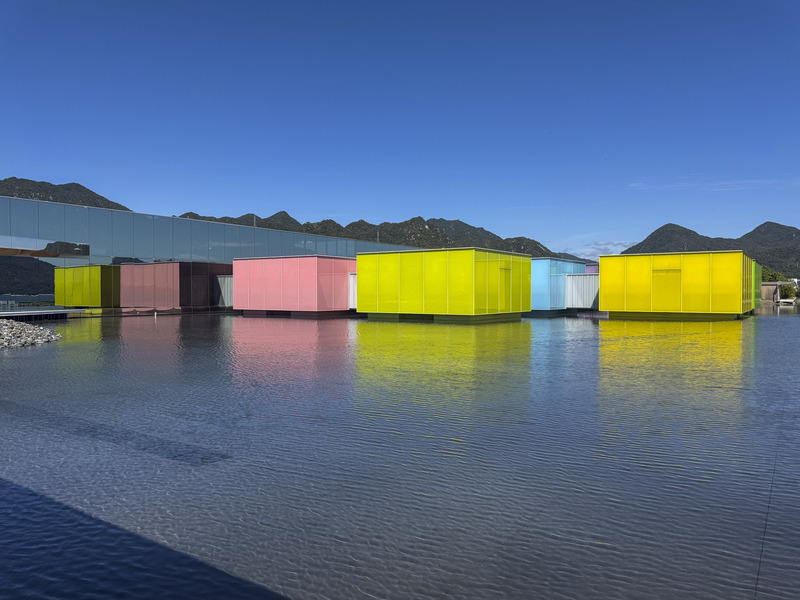
Setouchi’s Hidden Art Gems
-
 Art & Culture
Rokko Musical Box Museum & Gardens MORINONE: A Sensory Journey of Sight, Sound, and Touch
-
 Art & Culture
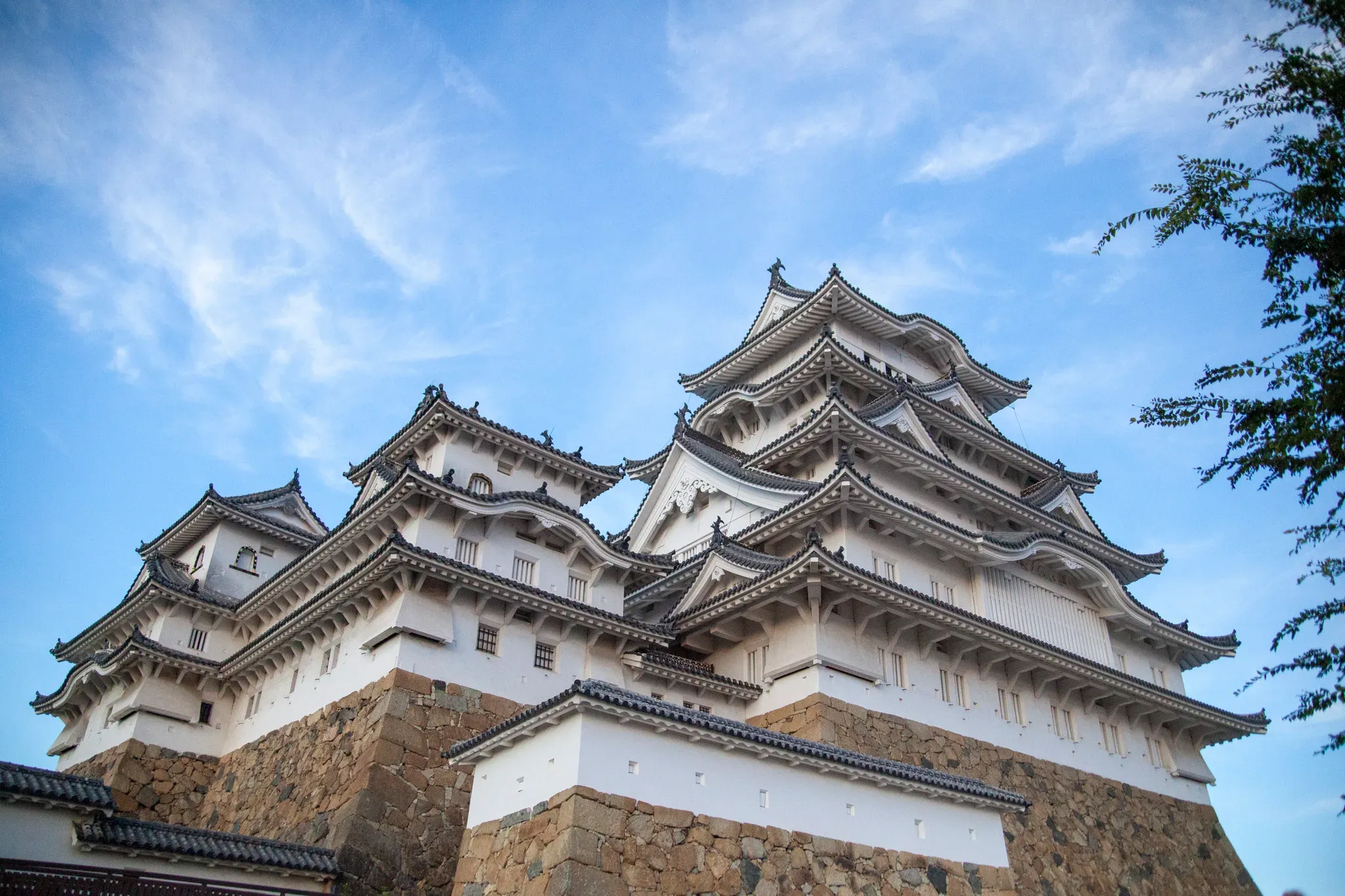
4 Days Exploring the Setouchi Art Islands and Himeji Castle
-
 Art & Culture
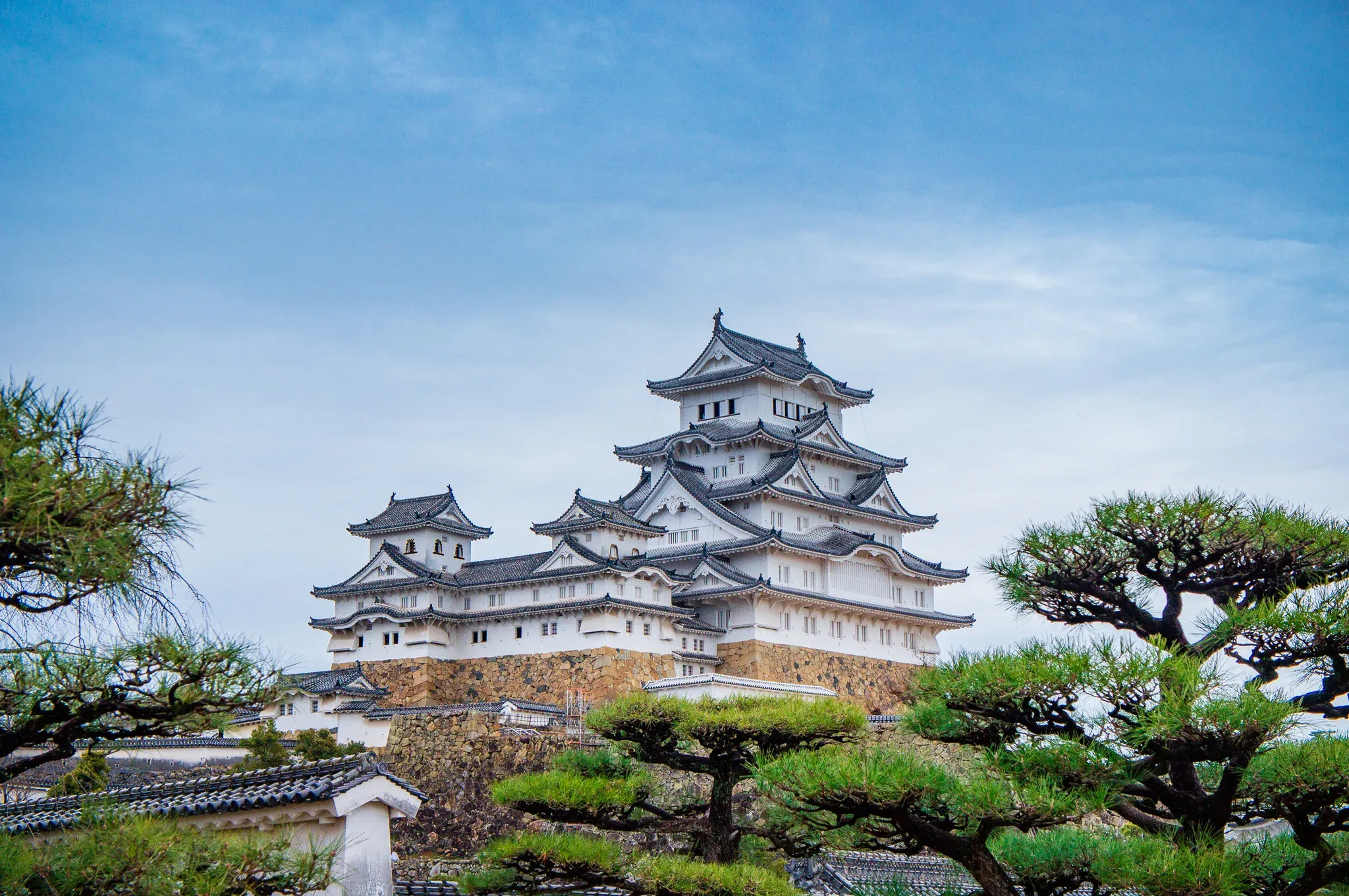
Himeji Castle: An Architectural Masterpiece and Symbol of Japan
RELATED DESTINATION
Hyogo
Hyogo Prefecture is roughly in the center of the Japanese archipelago. It has the Port of Kobe, which plays an important role as the gateway of Japan. It also is home to plentiful tourist attractions such as Himeji Castle, a UNESCO World Heritage site, and several hot spring areas. Kobe beef, one of the three major brands of wagyu beef, is a delicacy.