








Art & Culture
Tour Local Kilns to Experience the Venerable Tamba-Ware Pottery Tradition

-
- DESTINATION NAME
- Hyogo
-
- RELATED TAGS
-
- LAST UPDATED
- 18 February, 2026
The village of Tachikui has been producing Tamba ware, one of Japan’s oldest and most iconic styles of pottery, for over 800 years. For an introduction to this living pottery tradition, the team at Information Center Kamanjyo can arrange tours to working kilns to observe master artisans at work, learn about the pottery-making process, and view finished pieces. At some studios, it is also possible to create an original piece of Tamba ware under the guidance of an expert potter.
The Evolution of a Local Pottery Tradition
Sometime between the end of the twelfth and the early thirteenth century, the village of Tachikui began producing pottery, eventually becoming one of Japan’s venerable “Six Ancient Kilns.” Early Tamba ware was primarily functional, with a focus on everyday pots, jars, and mortars. These were made with natural glazes—earthy greenish hues resulting from hot wood ash adhering to the vessels during firing in the kiln. The ware was valued for its rustic yet refined aesthetic.

Technological advancements in the Edo period (1603–1867) spurred a significant evolution in Tamba ware. The introduction of the waritake multi-chambered climbing kiln was a major innovation in the early seventeenth century. It allowed for more efficient, larger-scale firing while improving quality. At the same time, a more specialized version of the potter’s wheel, known as the kickwheel, was widely adopted.
These innovations facilitated new possibilities. Potters began applying glazes to create intriguing layered patterns, a technique that contributed significantly to the ware’s development. They also developed various other decorative techniques, such as hamon (leaf patterns made by pressing leaves onto the surface), kugibori (patterns scratched with a pointed tool), haritsuke (affixing clay pieces to decorate the vessel), and tsutsugaki (drawing lines and patterns with a bamboo-made tubular tool). In the nineteenth century, the craft diversified further, utilizing pale white, chestnut-husk, and black glazes.


Visiting Family Kilns in a Rural Pottery Community
Walking tours of Tachikui pass through a rural landscape of forested hills and farmland, with homes and pottery workshops scattered along the Shitodanigawa River. Historically, pottery was a secondary occupation in Tachikui, part of agrarian daily life. Farmers traveled over the surrounding mountains to source clay from the fields and mountainsides of the region. During the winter months, they used it to make wares for daily use. Workshops along the side streets have freshly shaped pottery lined up outside to dry in the sun in preparation for firing. Occasionally, plumes of smoke rise from the neighborhood kilns.
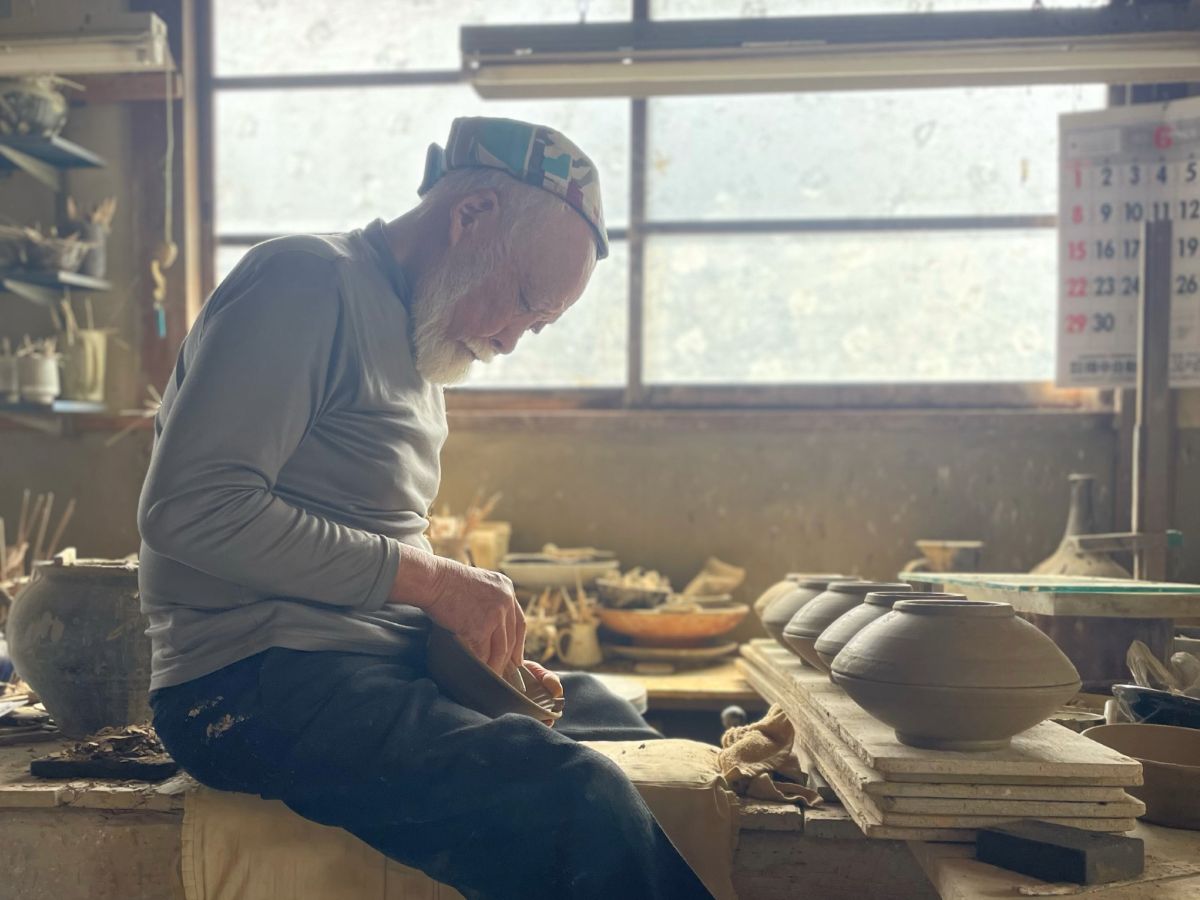
Today, the village has approximately 60 active pottery studios, many with multiple generations of the same family producing and selling their wares. Visits can be arranged to many of the studios, including Ichino Denichigama, known for producing flowerpots, and Toshihikogama, renowned for its tableware. At many studios, visitors can participate in hands-on pottery experiences.
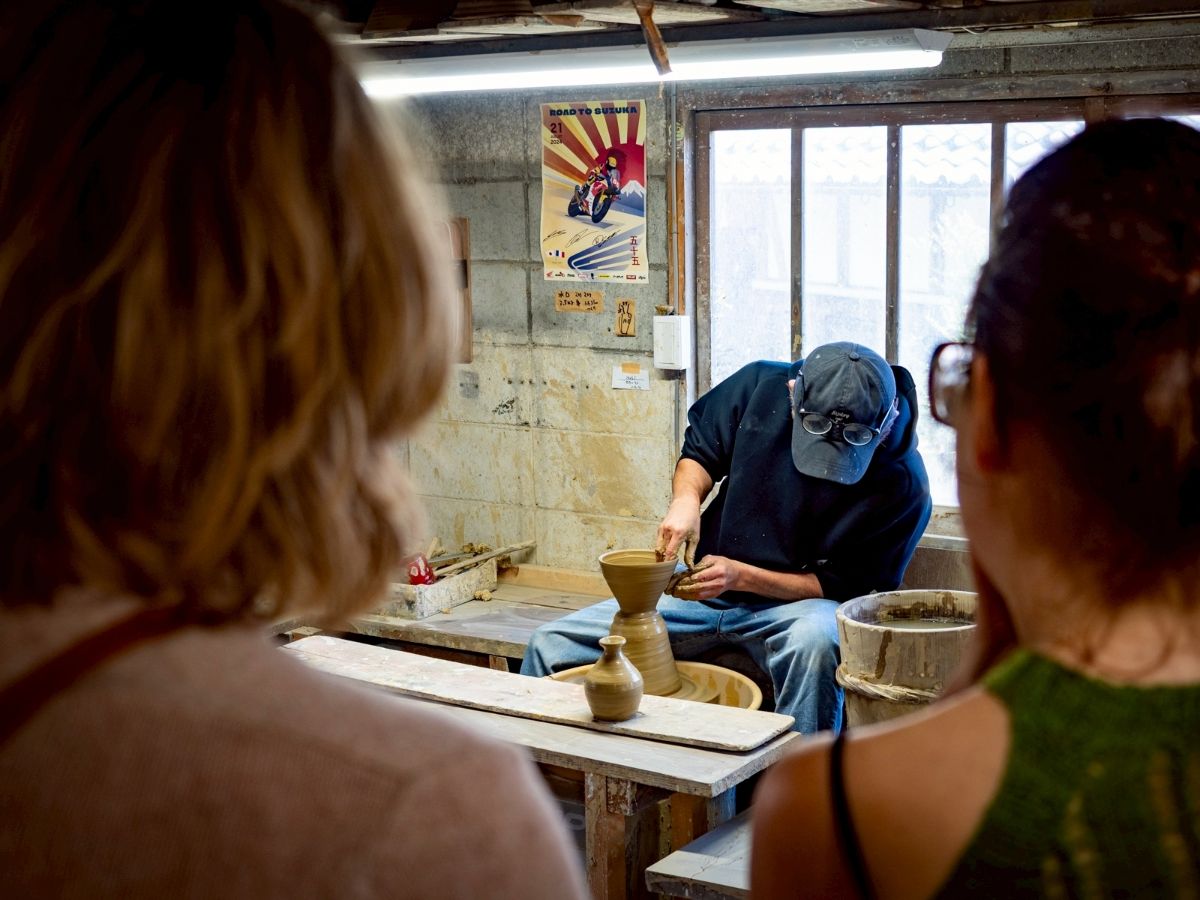
Throughout the tour, the guide offers insights into the production process—explaining, for example, the kickwheel traditionally used by Tachikui potters. The kickwheel is made of two horizontal wooden disks connected by a vertical shaft. The potter kicks the lower disk to spin the upper one, which holds the clay. Unlike most Japanese potter’s wheels, this one spins counterclockwise, so potters here develop a distinct kicking rhythm and hand technique that differs from other pottery traditions.
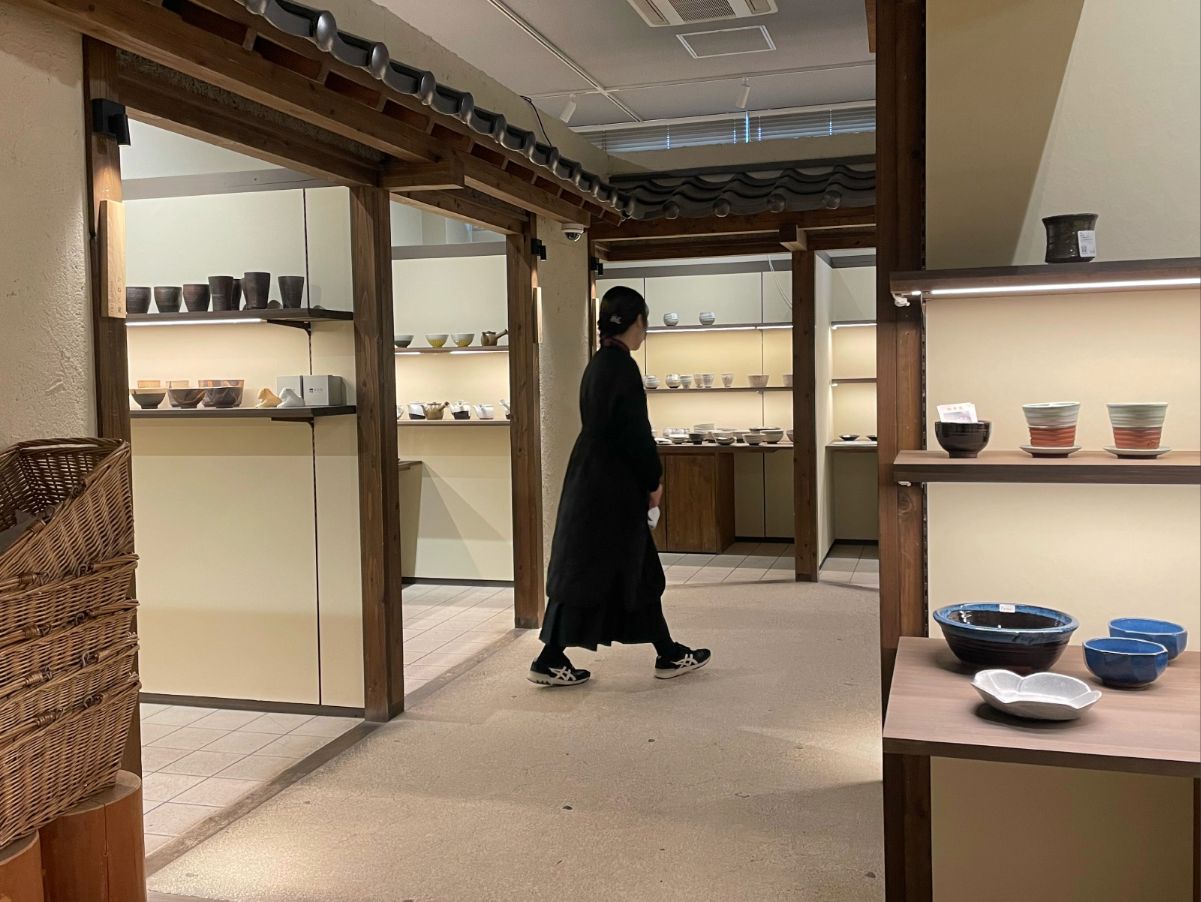
Most studios have an on-site gallery where visitors can purchase works and even talk to the potter who created them. For a general overview of the local craft, visitors can browse works from around 50 studios at Kamamoto-Yokocho, a dedicated collective space located at Tamba Traditional Craft Park Tachikui Sue no Sato.
The Oldest Climbing Kiln Still in Use
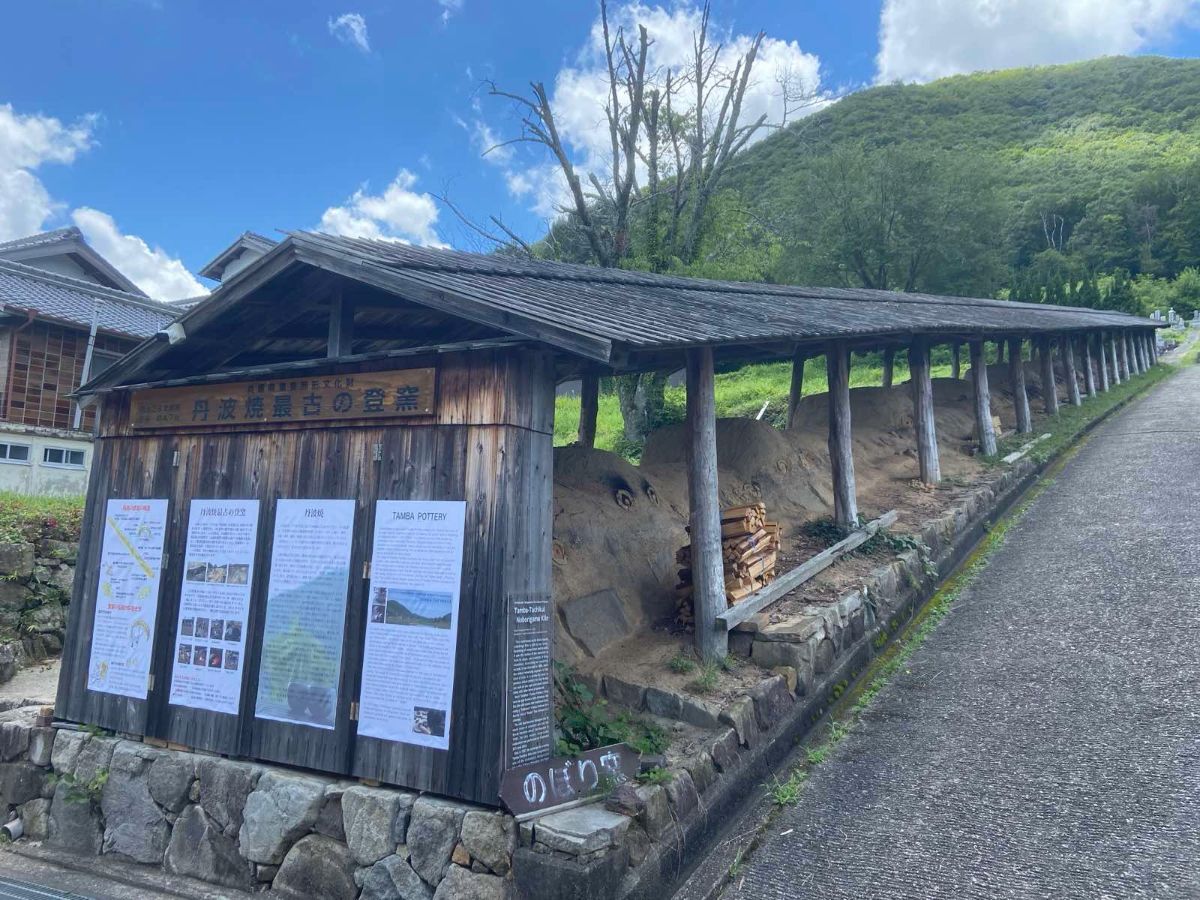
Tours also include a visit to the village climbing kiln, constructed in 1895. The kiln, which extends 47 meters along a slope near Information Center Kamanjyo, consists of nine connected firing chambers made from bricks and clay. It was restored in 2014–2015, and remains in use today. Firing the kiln is a significant undertaking as the firing process takes three days and three nights. It is a large-scale effort that involves many of Tachikui’s potters and typically takes place once a year in May.
The introduction of climbing kilns to Tachikui in the early seventeenth century represented a major innovation. These kilns are built in connected chambers that run upward along a slope.
In the firing chamber, the kiln is initially brought up to a high temperature over two days. This is followed by the “final firing” process, which brings the entire kiln up to its maximum heat. The tiered chambers are equipped with stoking holes, through which wood is fed, allowing the fire to progress efficiently from one chamber to the next. This structure makes it possible to fire large batches at once while preventing the temperature from fluctuating.

Related Articles
-
 Art & Culture
Masterpieces Wrapped in Stories
-
 Art & Culture
Setouchi’s Hidden Art Gems
-
 Art & Culture
Join Awaji Island Artisans for a Hands-On Kawara Tile-Making Experience
-
 Art & Culture
A Journey Through Setouchi’s Architecture in Harmony with Sea and Mountains
-
 Art & Culture
Local Products Continuing the Manufacturing Techniques and Culture of the Setouchi Region
-
 Art & Culture
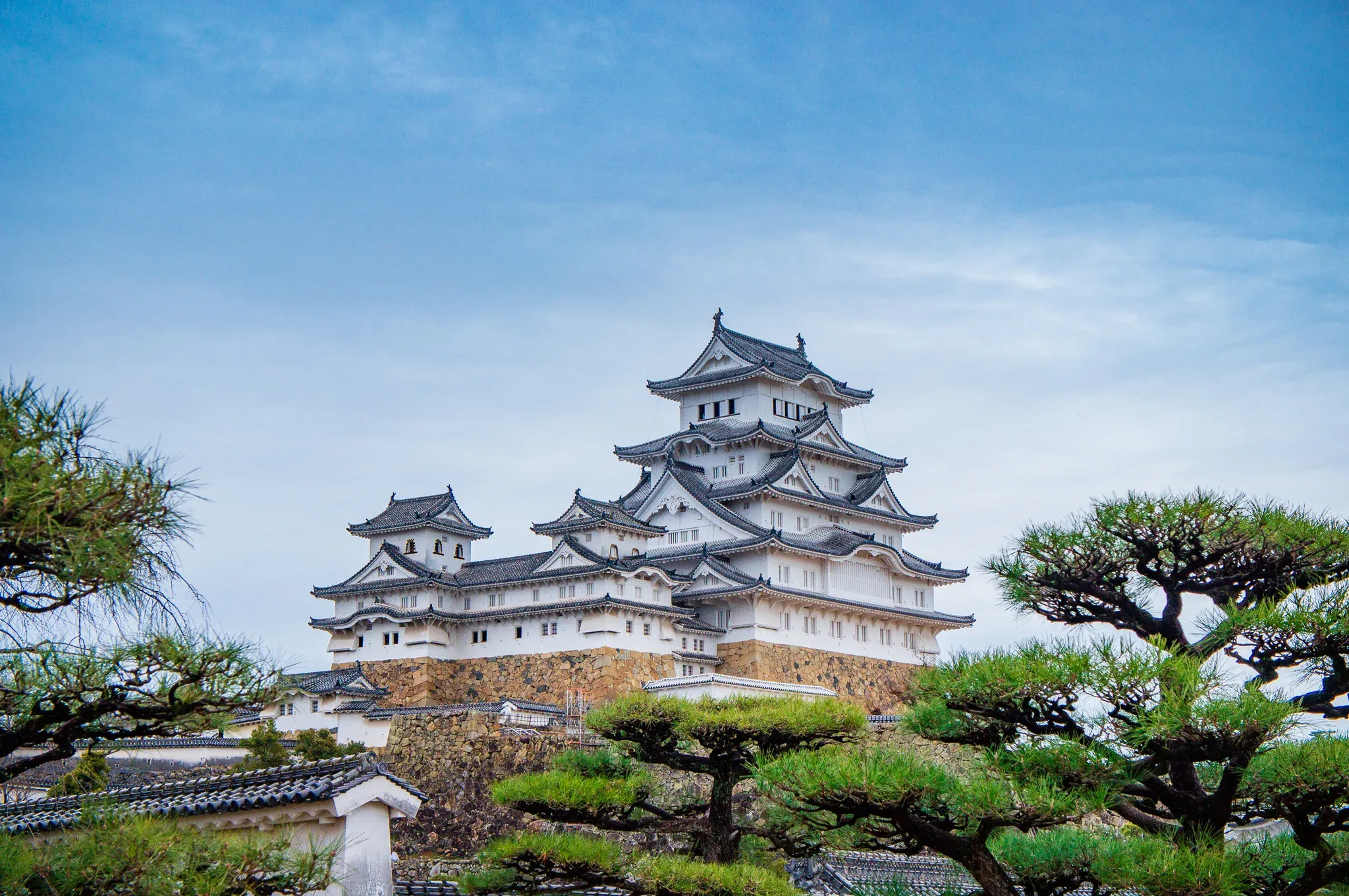
Himeji Castle: An Architectural Masterpiece and Symbol of Japan
-
 Art & Culture
Rokko Musical Box Museum & Gardens MORINONE: A Sensory Journey of Sight, Sound, and Touch
-
 Art & Culture
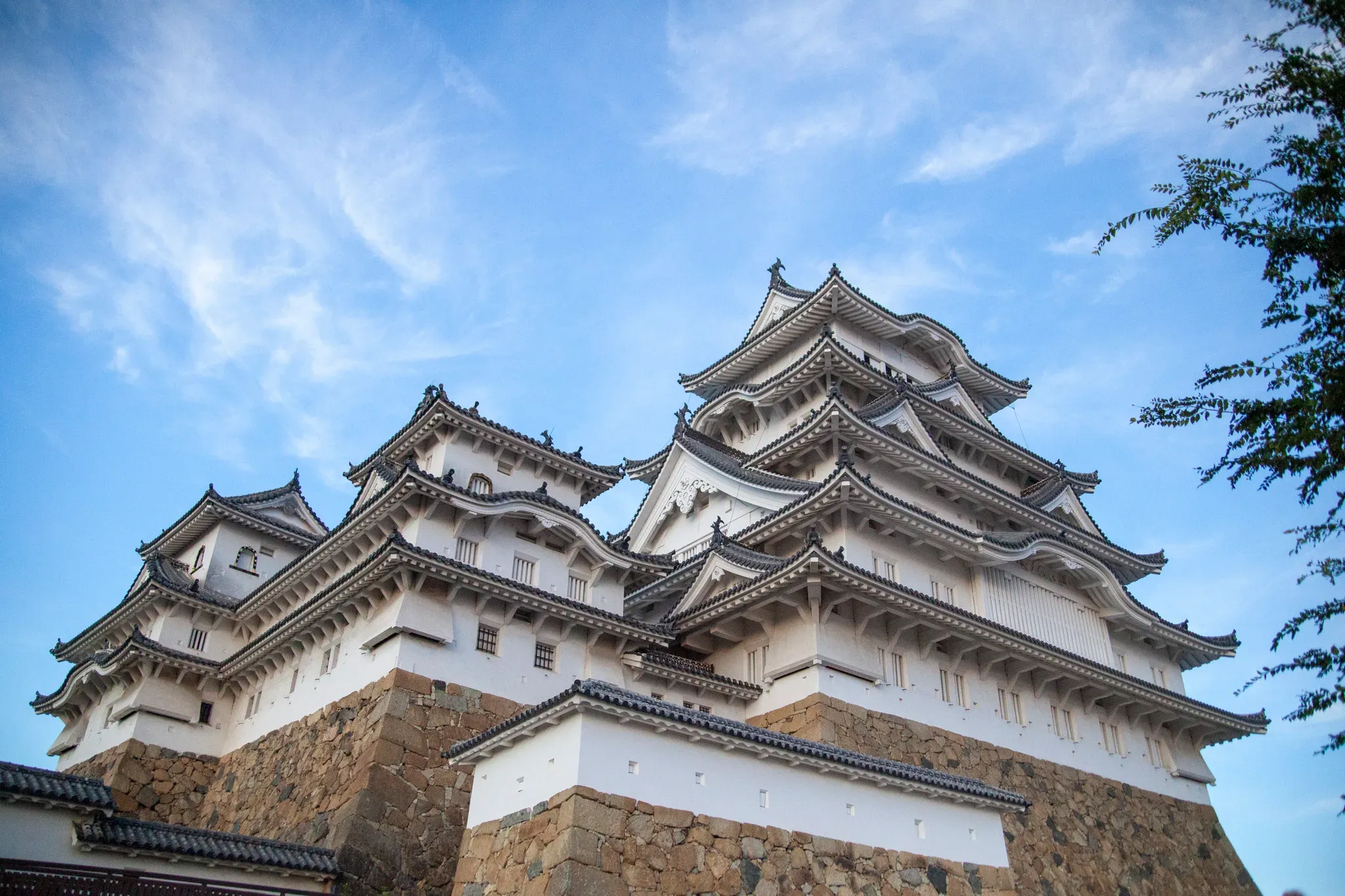
4 Days Exploring the Setouchi Art Islands and Himeji Castle
RELATED DESTINATION
Hyogo
Hyogo Prefecture is roughly in the center of the Japanese archipelago. It has the Port of Kobe, which plays an important role as the gateway of Japan. It also is home to plentiful tourist attractions such as Himeji Castle, a UNESCO World Heritage site, and several hot spring areas. Kobe beef, one of the three major brands of wagyu beef, is a delicacy.