

Relaxing Stay
Stay in Traditional-Style Lodgings on Teshima Island

-
- DESTINATION NAME
- Kagawa
-
- RELATED TAGS
-
- LAST UPDATED
- 16 February, 2026
Beautifully renovated traditional properties are bringing new life to Teshima, Kagawa Prefecture, showcasing the island as more than a day-trip destination from Naoshima and other prominent Inland Sea sites.
An extended stay on Teshima allows visitors to explore the local landscape, cuisine, and culture, as well as iconic art installations from the Setouchi Triennale. Furthermore, interaction with community members can give visitors who stay overnight a sense of everyday island life.
Tokuto: A Traditional-Style Residence Reborn
One of the properties available for overnight stays is Tokuto. Originally built in 1943 as the home of a wealthy resident, the main house stands on a hill overlooking the port town of Ieura. To reach the residence, visitors ascend a narrow path alongside a dry-stone wall of locally sourced granite. A traditional Japanese gate frames a dry landscape garden with large stone lanterns and a pathway leading to the main entrance.
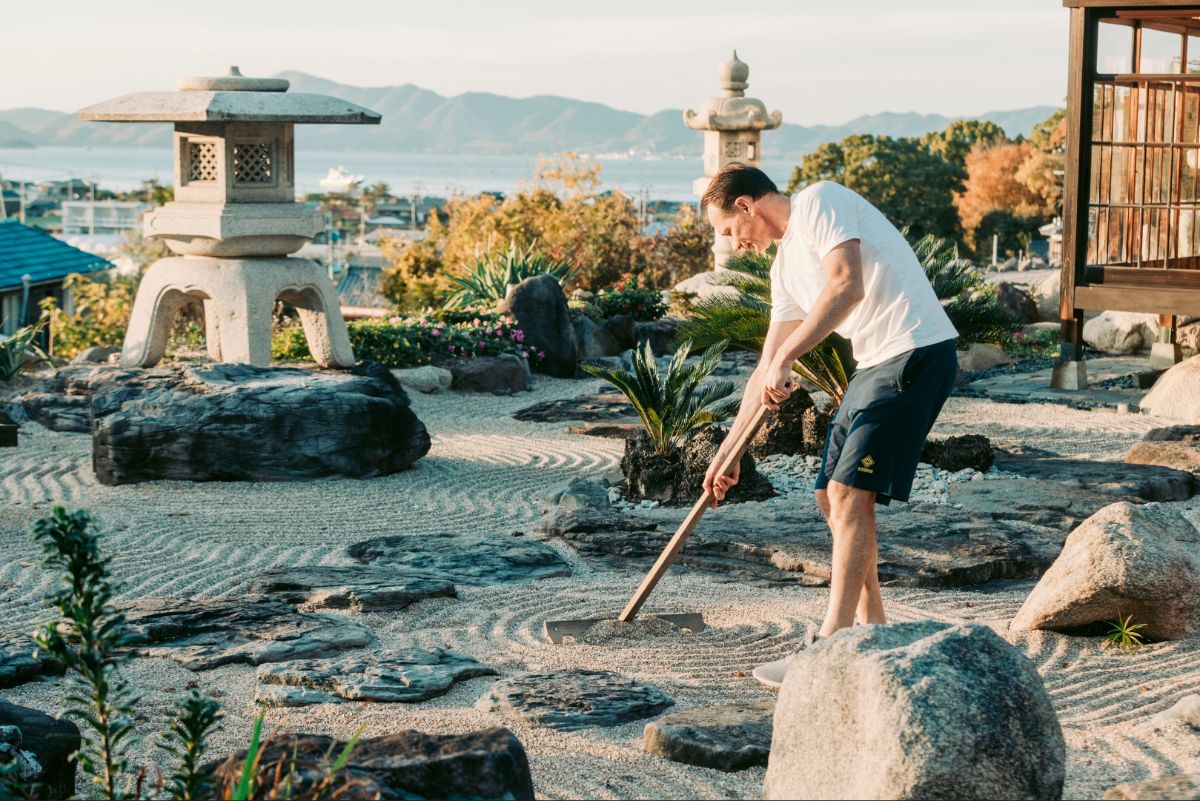
Before the current owners, Alan McFarlane and Reiko Hamanaka, acquired the property, it had been vacant for decades and was slated for dismantling. The garden was so completely overgrown that it covered the main house and annex. Through two years of extensive renovations, which occasionally required learning traditional Japanese building techniques from neighbors, they successfully restored the house and its grounds, and opened Tokuto to its first guests in 2021.
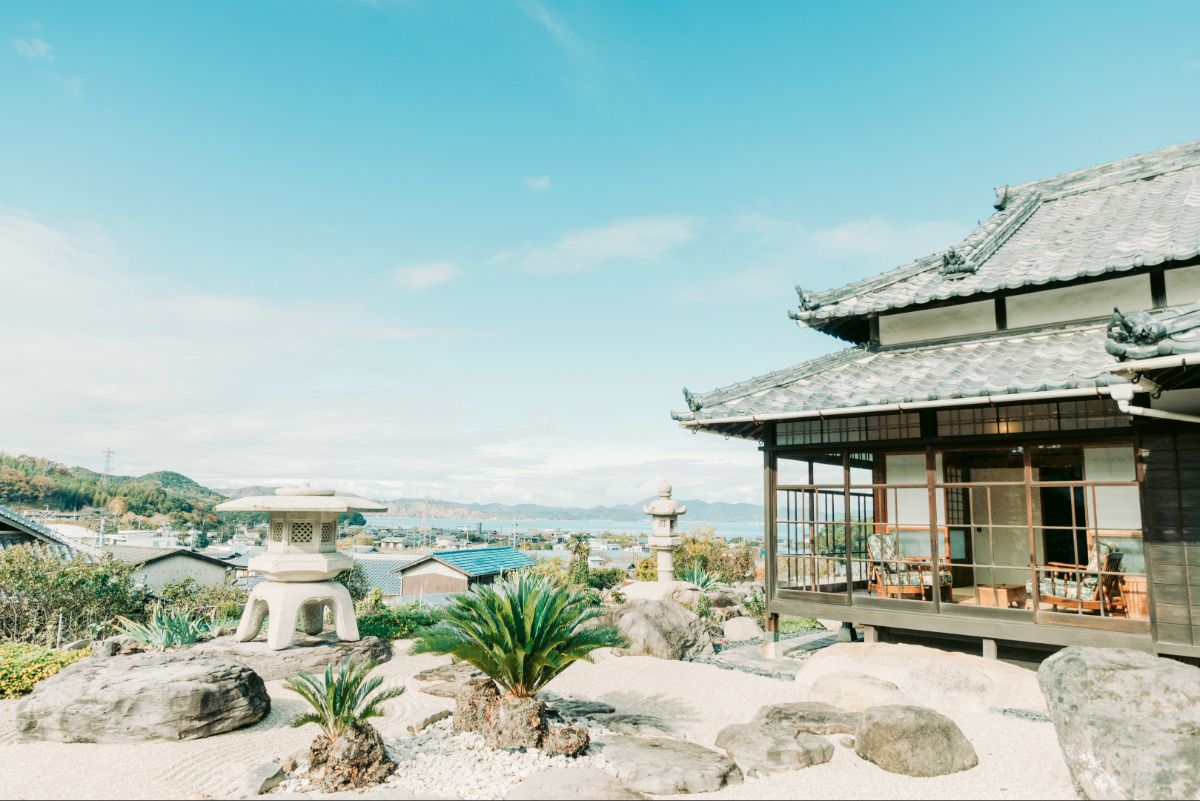
The main house, bookable as the Tokuto King Villa, retains many original features. Its tiled roof is decorated with special ridge-end tiles depicting the Seven Gods of Fortune. The wooden lattice entrance doors slide open to reveal an interior of wood-floored corridors and tatami-matted rooms. Sliding doors with panes of restoration glass offer magnificent views of the Seto Inland Sea.
The annex, or Tokuto Queen Villa, is also available for guest bookings. This structure, which once housed the original family’s maidservants, was similarly and extensively renovated.
While both buildings preserve much of their original design and decor, Alan and Reiko have integrated modern furnishings for guests’ comfort. For instance, Western-style beds are available, although guests may also opt to sleep on futon on the tatami-mat floors. Both Tokuto villas have well-appointed contemporary bathrooms.
After completing the Tokuto villas, Alan and Reiko took on a new property, Yutaka, restoring the main house and converting the storehouse into Satokura, a small cafe-restaurant. This property is a five-minute walk from the Tokuto villas.
Returning Home to Teshima to Build the Island’s Future
For Reiko, the decision to purchase and restore these buildings was deeply personal. Although she had spent many years living in Australia, she never forgot Teshima, the island where she was born and raised. Well aware of the declining population, she and Alan resolved to take action.
Launching Tokuto was their means of preserving a piece of the island’s past while contributing to its future. By welcoming visitors from around the world to Tokuto, they have been able to share the natural and cultural charms of the island. These visitors, in turn, contribute to the local economy, expanding employment opportunities that may encourage more young people to relocate to Teshima.
.jpg)
Locally Sourced Food and Culinary Experiences
The natural bounty of the Seto Inland Sea and Teshima sustains its community. Coastal waters yield seasonal fish, including highly prized red sea bream and yellowtail, while edible seaweed is cultivated at nearby nori farms.
Farming on the island is notably diverse, producing various kinds of citrus fruit, strawberries, and olives. The byproducts of olive oil pressing go into feed for the celebrated Olive Wagyu beef raised on Teshima and neighboring Shodoshima. Although rice terraces line the hillsides, some fields are being reclaimed by nature due to the declining number of farmers.
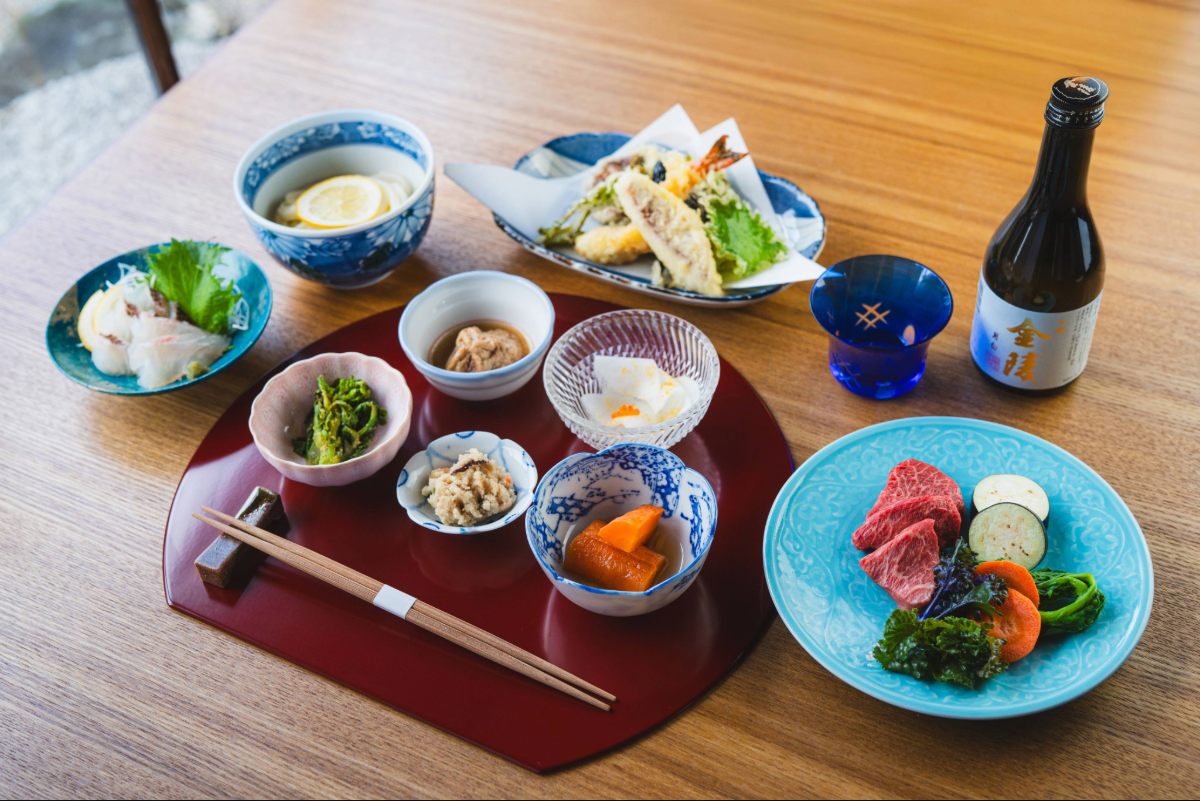
Island restaurants like Satokura (the cafe-restaurant attached to Yutaka Villa) prominently feature these local ingredients. Owners Alan and Reiko serve meals incorporating eggs and vegetables harvested directly from their own land. Guests are welcome to visit the vegetable gardens and join in with the harvesting to connect directly to the source of their food. For a true sea-to-table experience, traditional seine-net fishing excursions led by residents can be booked on the Teshima Tempo website, complete with the option to grill and enjoy the catch on the beach afterward.
.jpg)
Exploring Teshima by Bicycle
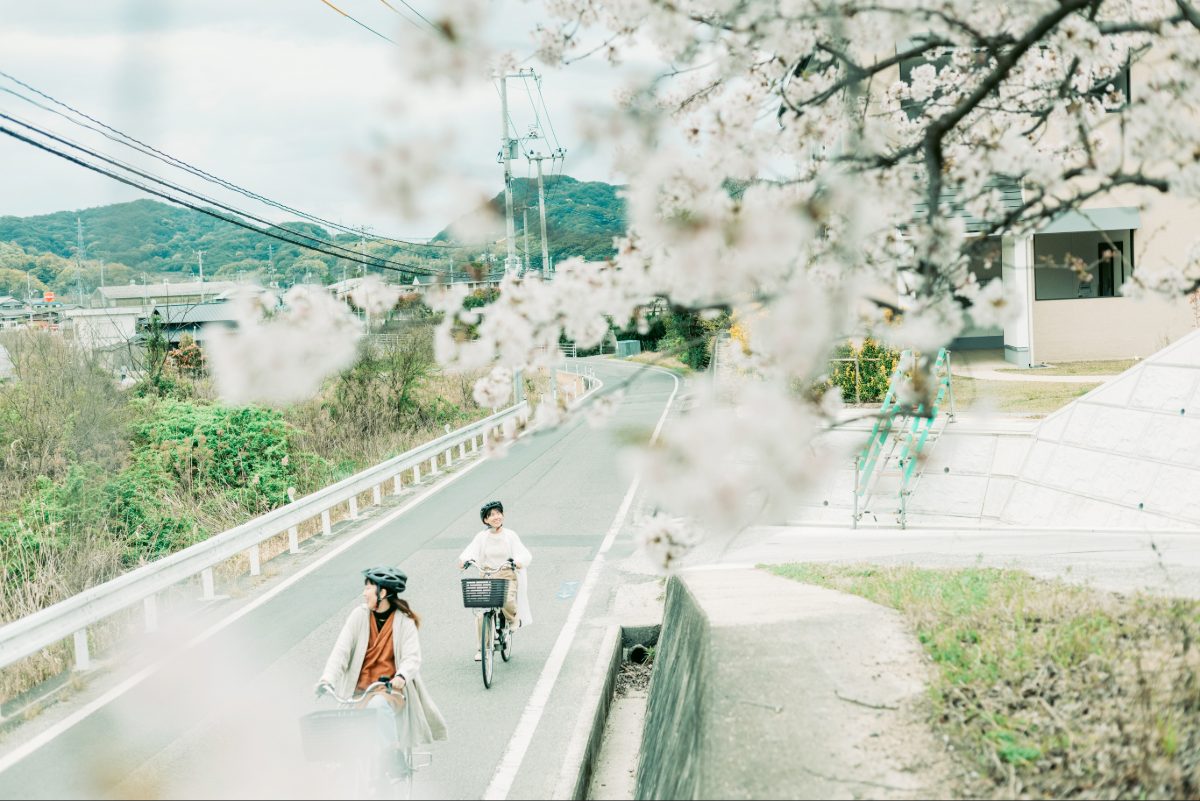
There is limited bus service on Teshima. Car rentals are available, but many visitors opt to explore the island on two wheels. Distances are short, but the hilly terrain makes electric bicycles desirable. Bicycles can be rented from numerous locations, including the Ieura and Karato ferry terminals.
Popular bike rides include visits to scenic viewpoints like Okazaki Park, known for its spring cherry blossoms, and the observation deck atop Mt. Danyama (339 m). Other scenic stops include the rice terraces near the town of Karato and a secluded beach on the southwest coast.
Teshima Art Museum and the Setouchi Triennale
The Setouchi Triennale, held once every three years across multiple islands in the Seto Inland Sea, is one of Japan’s premier art festivals. The festival began in 2010 with the aim of revitalizing the region, which has suffered from the effects of depopulation and environmental change.
Teshima is one of the host islands for the Setouchi Triennale, and has a number of permanent installations over its landscape. Place for Sea Dreamers by Heather B. Swann and Nonda Katsalidis is a boat-shaped cast-iron bench on the beach inspired by the island’s affinity with the sea. On the forested slopes of Mt. Danyama, the numerous wind chimes making up La Foret des Murmures by Christian Boltanski ring out to mourn and celebrate departed loved ones.
The Teshima Art Museum, designed by architect Nishizawa Ryue, is an artwork in itself. Its white concrete shell, said to resemble a water droplet at the moment of landing, is set on a hill among trees and rice terraces overlooking the sea. Inside is a single artwork entitled Matrix by sculptor Rei Naito. Two openings in the building’s shell keep its interior exposed to the elements, reflecting the interplay between art and nature.
.jpg)

Related Articles
-
 Relaxing Stay
A Nostalgic Japanese Landscape - A Relaxing Inn in the Mountains to Revitalize Your Body and Mind
-
.webp) Relaxing Stay
Relaxing Stay7 Recommendations for a Sustainable Stay in Setouchi
-
 Relaxing Stay
7 Unique Accommodations of the Setouchi Region
-
 Relaxing Stay
Unique Stays Immersed in the Scenery of Setouchi
-
 Relaxing Stay
A Unique Overnight Stay in Japan’s First-Ever Castle Tower Accommodations at Ehime’s Ozu Castle
-
 Relaxing Stay
A Quiet Stay on one of Japan’s Cat Islands: Manabeshima
-
 Relaxing Stay
Kinosaki Onsen: A Spa Town in the Heart of San’in Kaigan Geopark
-
 Relaxing Stay
Chiiori - Discovering the charm of a traditional Japanese kominka
RELATED DESTINATION
Kagawa
This is an area with many islands, including Naoshima and Teshima, which are famous for art. It also is home to the tasteful Ritsurin Garden. Kagawa is also famous for its Sanuki udon, which is so famous it attracts tourists from throughout Japan. The prefecture is even sometimes referred to as “Udon Prefecture.” [Photo : “Red Pumpkin” ©Yayoi Kusama,2006 Naoshima Miyanoura Port Square | Photographer: Daisuke Aochi]