

Itineraries
Gifts from the Sea and Land - A Foodies' Delight Trip Through Setouchi
Highlights
Before & After
It takes about 40 minutes by train from Osaka to Kobe’s Sake Brewery Area (Hyogo).
From Shimonoseki (Yamaguchi) you can easily head Eastward to Osaka and Tokyo by Shinkansen, or head in the opposite direction to Fukuoka, the stepping off point to discovering Kyushu.
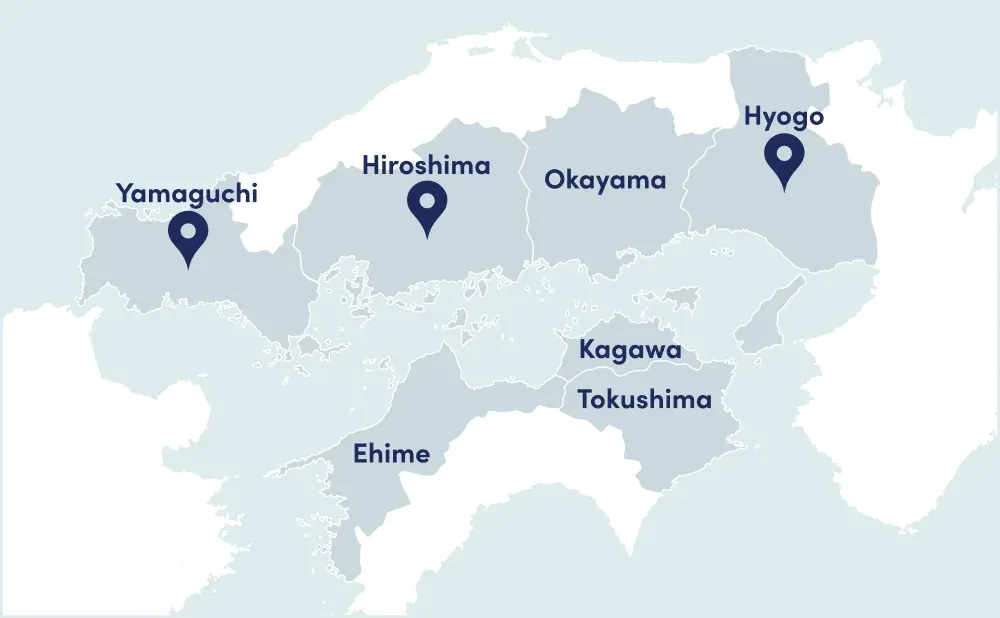
Blessed with a mild climate and abundant nature, Setouchi is a treasure trove of gourmet foods made from the best that the bountiful land and rich sea have to offer. Taking a food-focused journey through the Seto Inland Sea provides an opportunity to give your taste buds an experience they will long remember. Join us as we take you through just one possible permutation of a “foodies’ delight trip in Setouchi.” A feast for the senses served with a generous helping of cultural discovery.
- Day 2
- Hiroshima
Tomonoura


Tomonoura, a quaint port town located close to Fukuyama City in Hiroshima Prefecture is one of Japan’s scenic gems. Blessed with a safe and picturesque circular harbor, the Seto Inland Sea has always been at the centre of this town’s economic and cultural life, reaching a peak as one of the trading centres of Edo Japan. The town’s well preserved architecture presents a window to the bustling hive of activity characteristic of old Tomonoura, a beacon on the Seto Inland Sea attracting traders and travelers alike — a constant flow of people making the most of their time in town while waiting for a favorable tide. Just strolling through the streets takes you back centuries. — no wonder Tomonoura is becoming a popular backdrop for anime, and even Hollywood movies. Be sure to visit the Fukuzen-ji Temple with its famous view of the port town and picturesque islands across the strait. The immaculately preserved Ota Residence, famous for its medicinal herbal liquor, also offers a fascinating insight into life in those times. While the scenery will keep you reaching for your camera, when the tummy starts rumbling you are well served with delicious options, from charming seafront eateries to Meiji era restaurants, and more.
Accommodation: Migiwatei Ochikochi
- Day 3
- Hiroshima
Hiroshima City and the Atomic Bomb Dome


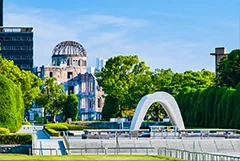
A visit to Hiroshima to see the World Heritage Site Atomic Bomb Dome, the Peace Memorial Park and the Peace Memorial Museum is highly recommended for any visitor to Japan. Taking in the historical significance of these sites, and the hopes they contain for a future world without the scourge of war and nuclear weapons, gives us the opportunity to think more deeply about our world as well as our place in it. However, the city of Hiroshima offers much more than just a sad reminder of war and somber hope for peace. With fresh seafood, first class Japanese and international cuisine, there are no shortages of ways to tempt your taste buds in this city. If one dish was to be claimed as representative of Hiroshima though, it would have to be the local specialty Hiroshima Style Okonomiyaki, a type of Japanese grilled pizza distinct to the prefecture.
Okonomiyaki Koshida
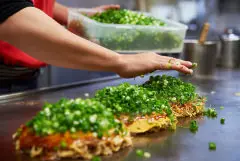
Okonomiyaki, the mixture of flour, vegetables, and assorted meats and seafood grilled flat on a hotplate, is not considered part of high Japanese cuisine. Rather, it better understood as one of the nation’s ‘soul foods,’ a dish that gained prominence in the post-war years because it was simple, inexpensive, and filled hungry stomachs. But being simple does not mean it lacks in flavor, and this is particularly true for the Hiroshima variety of okonomiyaki which adds a thin crepe-like base and a heap of noodles to the standard recipe. Wherever you go in Hiroshima you will be sure to find an Okonomiyaki store close by, but few serve a better dish than Okonomiyaki Koshida. A family business now in its third generation, Koshida is one of those restaurants you can tell from just looking at the exterior, and the queue of people waiting to get in, that whatever they’re making inside has got to be good! Tasty enough to get into the “Michelin Guide Hiroshima 2013 Special Edition,” Koshida’s traditional Hiroshima Okonomiyaki, as well as the performance that goes into making it all, will not disappoint. Also not to be overlooked is the extensive side menu that makes great use of Okonomiyaki Koshida’s massive hot plate grill, including a set of sweets, such as their ‘hot cakes,’ that prove a consistent favorite among those in the know.
Miyajima and Itsukushima Shrine


The vermilion torii gate rising majestically out of the sea is an iconic image associated with Japan, famous throughout the world. A visit to Miyajima island to see this torii gate, and the Itsukushima Shrine for which it serves as an entrance, holds pilgrimage status for many people that have longed to come to Japan. The shrine and its surroundings are visually stunning, not only for the architecture and aura they possess, but also for the dramatic changes rendered as water flows into the tidal bay, covering the sandy bottom with a liquid mirror which magnifies the vivid colorings of the centuries-old buildings. With easy access from central Hiroshima, spending time on this picturesque island, with its famous temples and ever-present friendly deer, provides not only a swathe of photo opportunities, but a chance to sample Hiroshima’s famous oysters.
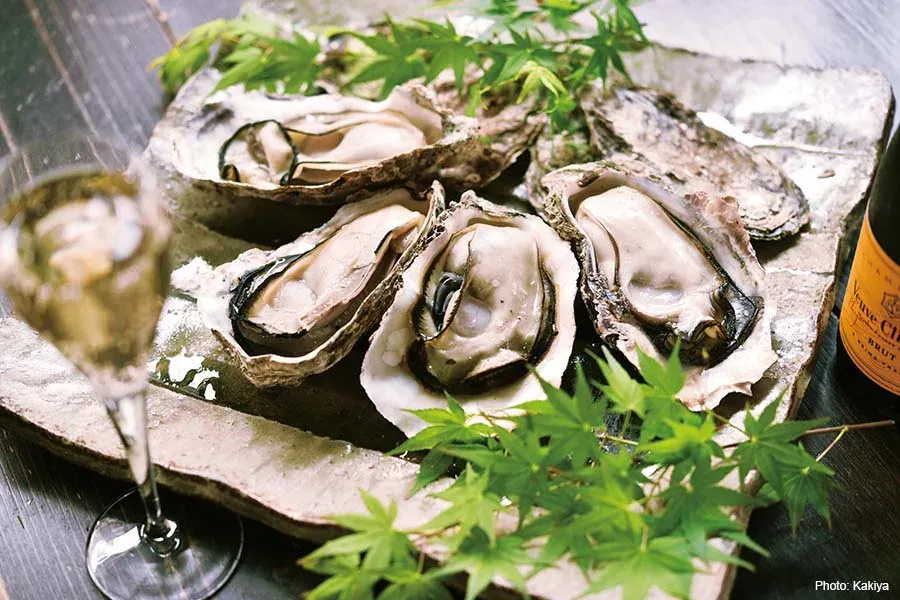
Oyster shop Kakiya


For more than 400 years, the gently flowing and nutrient-rich Seto Inland Sea waters surrounding Hiroshima have proved the ideal location to grow the best oysters in all Japan. Hiroshima accounts for between 60 and 70% of Japan’s total oyster production, and the oysters in Hiroshima are renowned for being large, fleshy, and very tasty. With oyster festivals and specialty restaurants at the ready, Miyajima Island stands apart as having taken oyster cuisine to its highest level. Oyster connoisseurs visiting Miyajima should keep an eye out for Kakiya (literally Oyster Shop), that serves top quality oysters in an amazing array of dishes sure to please even the most discerning oyster aficionado. Whether you like your oysters fresh, flame grilled, fried in batter, marinated, or gratineed, there is sure to be a style here to please. Also home to a 3000 bottle wine cellar, you will have no trouble finding a liquid companion for these gastronomic delights. Lookout for the large grill outside the shop and then follow your nose.
Accomodation: Miyajima Kinsuikan
“Miyajima Kinsuikan,” is located right on the waterfront, a five minute walk from both the ferry terminal and Itsukushima Shrine, and with an entrance directly onto the busy shopping street Omotesando Dori. It would be hard to think of a more perfect location to spend a night in Miyajima. Kinsuikan is the epitome of easy, comfortable, and convenient travel. English is widely spoken amongst the staff, and menus and instructions are tailored for the international visitor. The rooms have either a lush mountain view, or look out directly over the sea. With a sea view room you can even sit and watch the famous torii gate change its appearance with the tides and nighttime illumination, all from the comfort of your armchair on the enclosed balcony. Simply bliss. The spacious rooms and excellent cuisine made from the highest quality local ingredients will have you wanting to extend your stay. Something you could contemplate during a long soak in one of the island’s few natural onsen baths. Or maybe it will be going through your mind as you stroll down to see the nightlights of Itsukushima Shrine in your yukata robe.
- Day 4
- Yamaguchi
Kintai-kyo Bridge

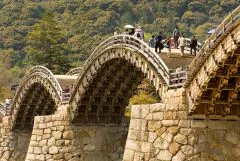
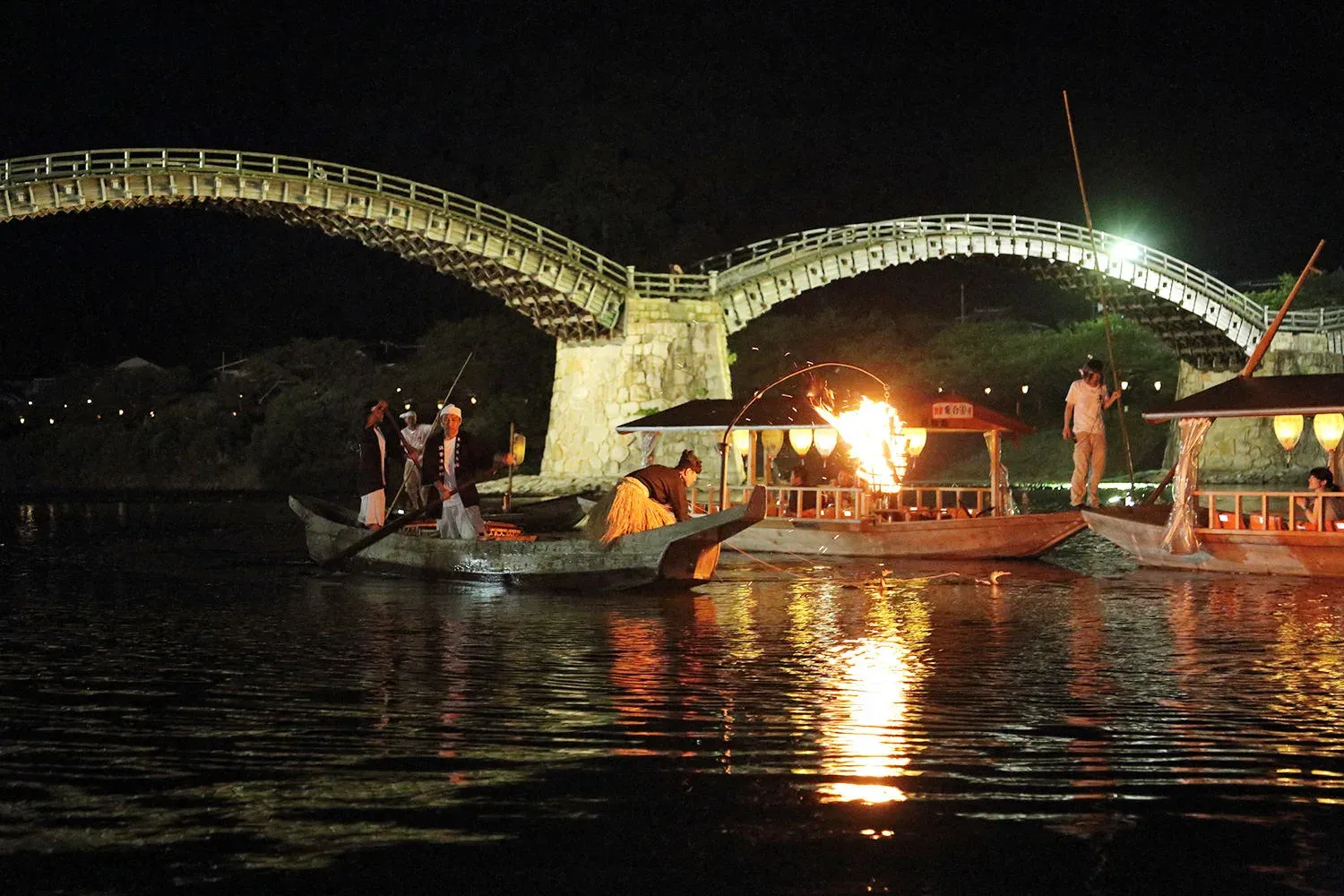
The Kintai-kyo Bridge, a series of five wooden arches spanning the Nishiki River, are postcard perfect. First built in 1673 by a local lord wanting to connect his castle to the opposite side of the river, the bridge initially proved vulnerable to the regular fierce flooding. After decades of experimenting with one failed design after another, the present design, with solid stone foundations and a gravity suspended superstructure, took shape. It is a marvel of feudal design that has stood the test of time. The bridge itself is nestled amongst a beautiful natural setting, whether surrounded by the delightful pinks of spring’s cherry blossoms, the verdant greens of summer, the fiery hues of autumn, or the shimmering white of winter snow, it is a stunning photographic setting, and one that highlights the beauty of Japan’s famed four seasons. Not only has Kintai-kyo bridge served as a way to connect two banks, it is also most visitor’s first stop in Yamaguchi Prefecture, thereby serving as an entryway into a vast array of historical, cultural, and gastronomic treats awaiting visitors.
Asahi Shuzo Brewery DASSAI Store


The Asahi Shuzo Brewery located deep in the mountains of Yamaguchi Prefecture is owned and operated by the Sakurai family. Using only high end Yamada Nishiki rice, the best rice for brewing sake, they produce a premium Junmai Daiginjo sake under the brand name ‘Dassai.’ However, Asahi Shuzo is no ordinary sake brewery. Rather than the painstaking traditional brewing process carried out under the watchful eye of a Master Brewer, this brewery has been driven by innovation, introducing revolutionary techniques and technology in an effort to attain the perfect sake. A sake for sipping and relishing each drop, not one for knocking back and having a grin on your face. Milling the rice grain to its very core to gain the maximum percentage of starch, or introducing centrifuges to ‘press’ their sake rather than traditional machines, these are just some of their revolutionary leaps in brewing sake. Asahi Shuzo’s results stand on their merits, and their latest benchmark, ‘Dassai Beyond,’ is as close to perfection in sake as can be imagined. It is a sake of unparalleled quality, one in a long line of superior brews that have been given to heads of state and royalty as gifts of national distinction. If you book a week in advance you can tour the brewing facilities, otherwise a trip to the brewery store will give you direct access to hard-to-acquire bottles, and a wide range of boutique products such as sake cakes and ice cream. There is something for everyone to enjoy in this most unique sake brewery.
Shunpanro (Blowfish)

The deadly Blowfish meal is legendary throughout the world, and not without reason — incorrectly prepared blowfish can, and does, kill unlucky diners. In fact, it was considered so dangerous that it was banned for hundreds of years. It wasn’t until the early days of modern Japan that you could legally eat this dish. Yamaguchi is the home of this adventurous meal, and the expert chefs capable of safely preparing it for your table. Pride of place amongst Blowfish restaurants belongs to Shunpanro in Shimonoseki, where in 1887 this courageous restaurateur first served the illegal dish to the sitting prime minister. Fortunately, he loved the taste and abolished the ban.the rest is history, and blowfish is now one of Japan’s most famous dishes. Experiencing a full course Blowfish meal is a treat worthy of retelling to the uninitiated. If your schedule allows, take advantage of the well-appointed accommodation at Shunpanro, where every room has a panoramic sea view over the Straits of Kanon which separate the Honshu mainland from the southernmost island of Kyushu. A perfect place to watch the sea traffic passing in the distance while you gather your energy for further adventures.
Related See & Do
-
Traditional Culture
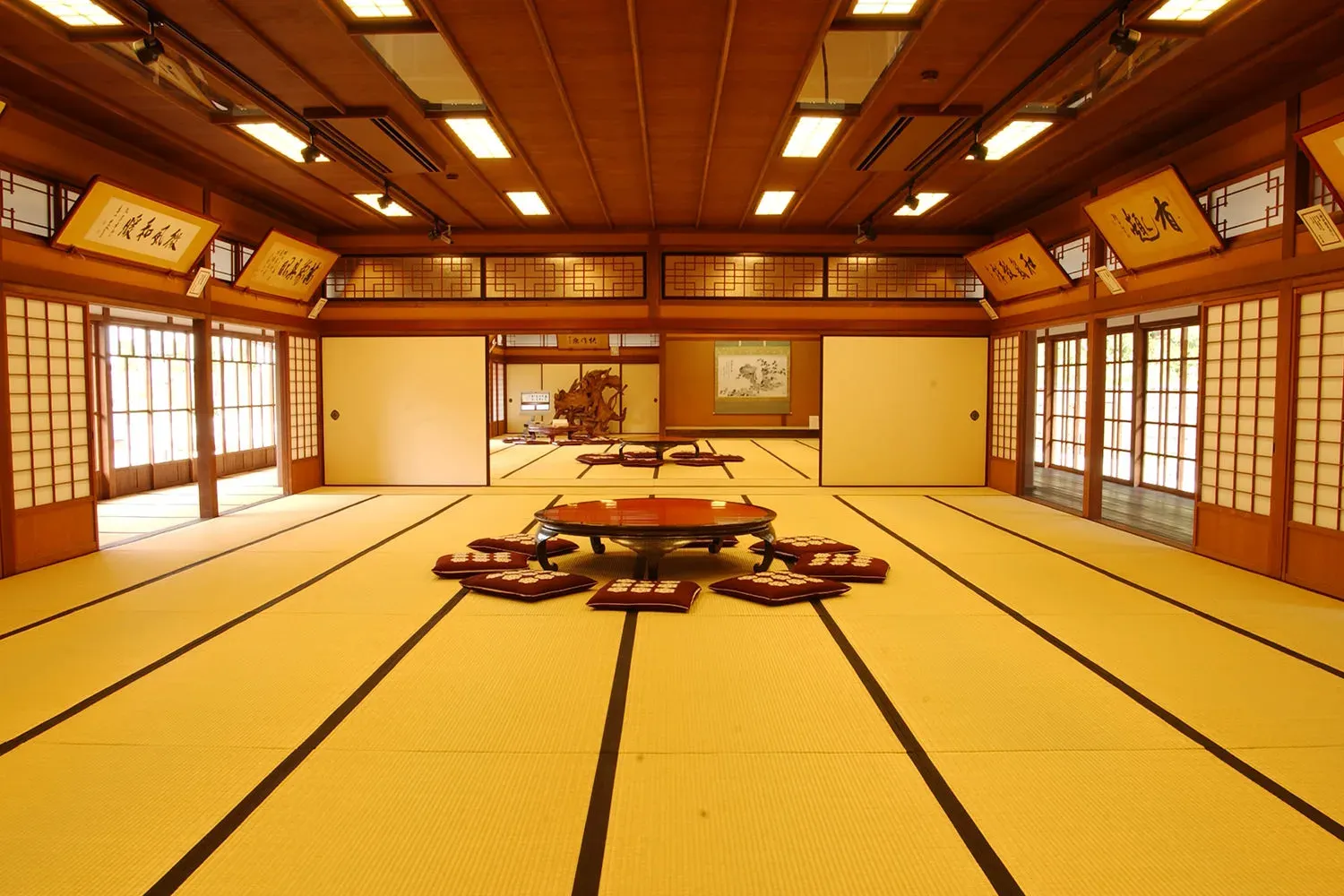
Yamaguchi City Saikotei
Yamaguchi
-
Temples & Shrines
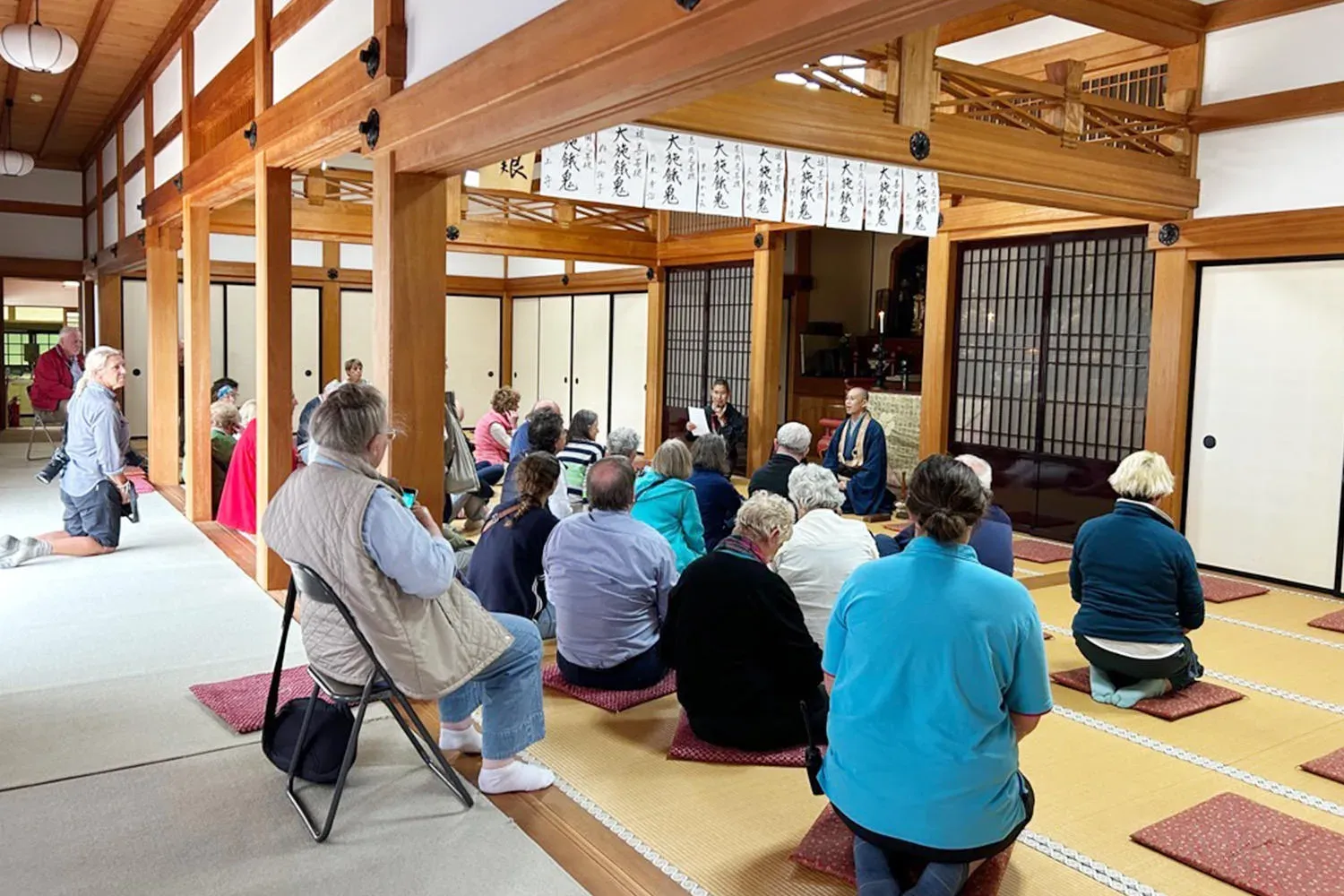
Sorinji Temple
Yamaguchi
-
Temples & Shrines
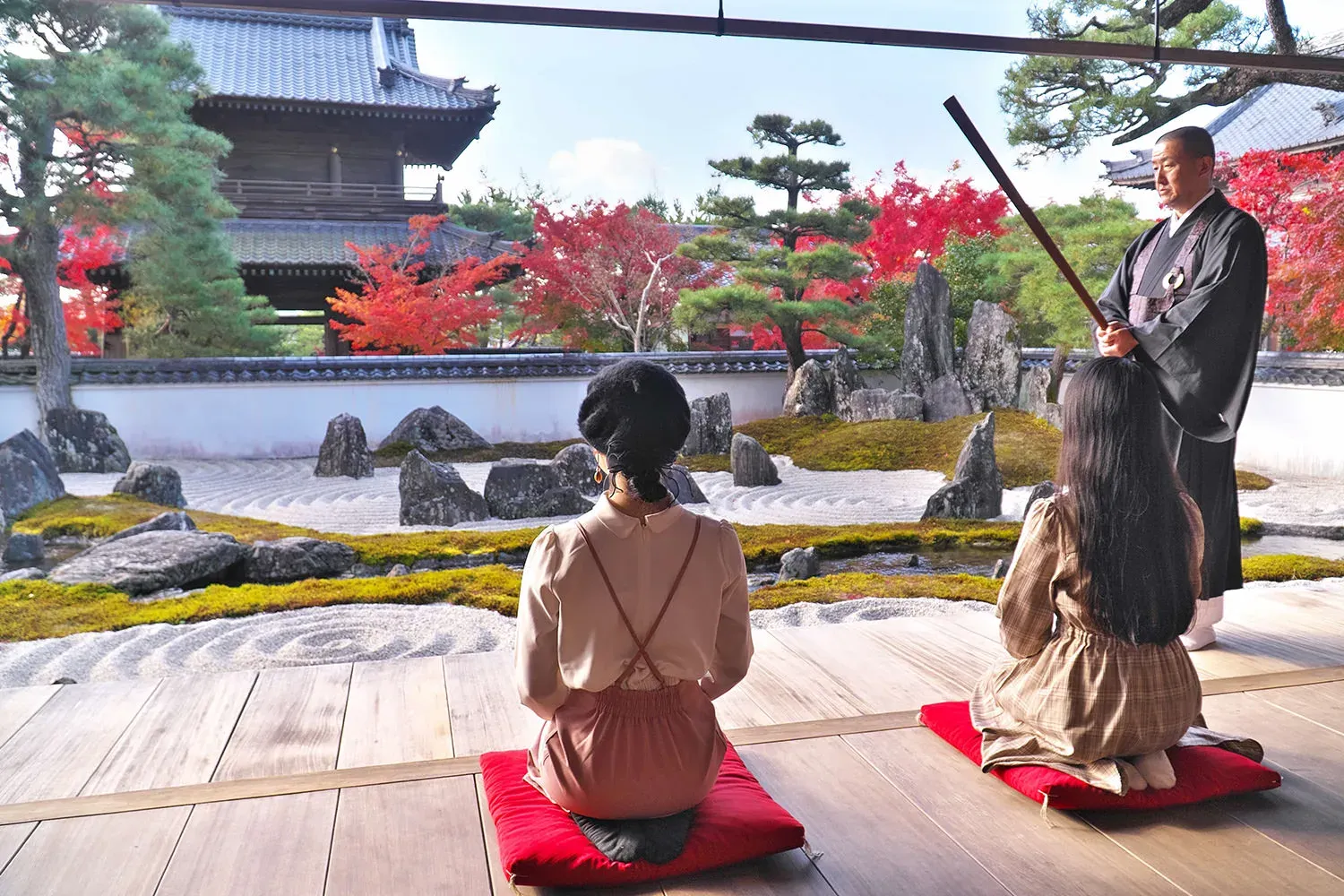
Kanyoji Temple
Yamaguchi
-
Traditional Culture
Kintaikyo Cormorant Fishing
Yamaguchi
-
Temples & Shrines
Hofu Tenmangu
Yamaguchi
-
Activities
Kamikatsu Zero Waste Center
Tokushima
-
Museums
Art Island Hopping in Setouchi
Kagawa
-
Local Delicacies
RISE & WIN Brewing Co.
Tokushima
-
Temples & Shrines
Saidoji Temple
Okayama
Related Articles
-
Relaxing Stay
Unique Stays Immersed in the Scenery of Setouchi
-
Food & Drink
5 Setouchi Sake Breweries Where You Can Tour and Experience Sake Making
-
History
To Towns Where Time Breathes: A Journey Through the History and Ancient Streetscapes of the Seto Inland Sea
-
Art & Culture
Setouchi’s Hidden Art Gems
-
Relaxing Stay
A Nostalgic Japanese Landscape - A Relaxing Inn in the Mountains to Revitalize Your Body and Mind
-
Art & Culture
Tour Local Kilns to Experience the Venerable Tamba-Ware Pottery Tradition
-
History
Tour the Stately Residence and Garden of a Powerful Daimyo Family
-
Art & Culture
Join Awaji Island Artisans for a Hands-On Kawara Tile-Making Experience
-
Art & Culture
Unearth the Secrets of Bonsai on a Guided Tour in Takamatsu
